13 minutes
UChat
Posted by
7 Drift Alternatives in 2026: Choose by Revenue Workflow
13 minutes
Posted by
UChat

When you need multi-channel AI conversations or branded chatbot delivery, UChat is the first Drift alternative to consider. Choose Qualified instead when the entire brief is enterprise B2B website pipeline and Salesforce-connected AI SDR work. Intercom and Zendesk are stronger starting points for customer-service operations, while HubSpot makes more sense when CRM should own the journey.
Drift now sits inside Salesloft, so the real decision is not simply which chat widget looks similar. It is which operating model should replace the work Drift performs for you.
Bottom line: Replace the job, not the brand name.
Drift Alternatives At A Glance
Alternative | Right for whom | Replaces most directly | Important tradeoff |
|---|---|---|---|
UChat | Teams building multi-channel AI journeys and agencies packaging them for clients | Chatbots, AI qualification, workflow actions, handoff and branded client delivery | It is not Salesloft's full revenue orchestration suite |
Qualified | B2B marketing teams focused on website pipeline | AI SDR conversations, meetings, email nurture and routing | Custom pricing and a more enterprise, Salesforce-centered motion |
Intercom | Support teams that want AI plus a modern helpdesk | Messenger, inbox, tickets, knowledge and AI resolution | Seat and outcome costs both need modeling |
HubSpot Sales Hub | Teams that want CRM to anchor sales execution | CRM, pipeline, prospecting and sales automation | Broader Hub adoption can expand cost and administration |
Zendesk | Mature service teams with governance needs | Ticketing, omnichannel routing, AI agents and contact-center operations | More support-centric than pipeline-generation-centric |
Tidio | Smaller ecommerce and service teams | Website chat, Lyro AI, helpdesk and simple flows | Less suitable for complex partner delivery and deep custom workflows |
Crisp | Teams wanting predictable workspace pricing | Shared inbox, chat, omnichannel support and no-code automation | AI credits and higher-tier features still affect real cost |
How We Selected These Alternatives
We did not rank products by the length of their feature lists. We selected seven options that can credibly replace a distinct job buyers may have used Drift to perform.
The shortlist uses four filters:
A clear operating model. Each option must fit a specific buyer, such as an enterprise demand-generation team, a support organization, a CRM-led sales team or an agency delivering chatbots to clients.
Current first-party evidence. Product scope, packaging and pricing claims come from official vendor pages reviewed on 5 September 2026.
An explicit replacement boundary. We state what each product replaces well and what still requires another system.
A practical proof path. A buyer should be able to test the recommendation against a real lead or support journey, not just compare screenshots.
We did not assign a single overall score. A product designed for enterprise website pipeline should not win or lose points because it lacks agency white-label billing, just as a multi-channel automation platform should not be treated as a complete sales-engagement suite.
What Are You Actually Replacing In Drift?
Before booking demos, identify which job currently creates value. The answer changes the shortlist.
Job to replace | Evidence that this is your real need | Start with |
|---|---|---|
Website pipeline | Revenue depends on recognizing target accounts, qualifying visitors, routing reps and booking meetings | Qualified or Drift inside Salesloft |
AI SDR | The system must engage, qualify and follow up with inbound buyers across website, email or meetings | Qualified |
Customer support | Resolution, agent productivity, tickets, knowledge and service governance matter more than pipeline | Intercom or Zendesk |
CRM-centered selling | Contacts, opportunities, prospecting and reporting must live in one customer record | HubSpot Sales Hub |
Lightweight website service | A smaller team needs chat and automation live quickly, with limited solution design | Tidio or Crisp |
Multi-channel automation | The same business journey must work across web, social, messaging or voice | UChat |
Agency commercialization | You need branded client workspaces, configurable plans, billing and repeatable delivery | UChat Partner Plan |
This map also exposes a valid outcome: you may not need to replace Drift. You may need a second specialist layer while Salesloft remains the revenue system of record.
Why Teams Look For A Drift Alternative
Salesloft positions Drift around conversational marketing, target-account engagement, website chat, real-time rep routing and meeting booking. That remains valuable when the website is a major source of B2B pipeline. Salesloft pricing is quote-led, while its product terms describe Drift deployments by domain and some products by reply or site-visit volumes.
Teams usually start looking elsewhere for one of five reasons:
they need conversations beyond the website;
they are building customer support rather than B2B pipeline;
their CRM should own qualification and follow-up;
they want a lighter, self-serve product;
they want to resell automation under their own brand.
Keeping Drift may still be the right answer. If Salesloft already anchors revenue operations and the website-to-meeting journey is performing, replacing it can introduce a second system without improving the outcome.
1. UChat: For Multi-Channel And White-Label Automation
UChat fits when a conversation must continue beyond website qualification. Its AI Agents can answer with business knowledge, invoke AI Functions and hand work to other agents or people. Flow Builder adds deterministic conditions, data capture, API requests and reusable logic. Its channel coverage spans web chat, social, messaging and voice entry points.
For agencies, the Partner Plan adds custom-domain branding, configurable client plans, billing automation, separate client workspaces and Partner API operations. The public Partner Plan is $199 per month, with client workspace license costs starting at $10 per month. Direct UChat plans are separate: a team can start on Free or test Pro features during a 14-day trial.
That commercial layer turns a chatbot build into a repeatable service product rather than a collection of isolated website widgets. A representative workflow looks like this:
A prospect enters through web chat, WhatsApp, Instagram or another configured channel.
An AI Agent answers from approved business knowledge and gathers the fields needed for qualification.
Flow Builder applies conditions and triggers an integration, API request or internal action.
A human takes over when the issue needs judgment or the lead reaches an agreed threshold.
A board, ticket or connected CRM records the outcome and keeps ownership visible.
Choose UChat when the journey might begin with Instagram, WhatsApp, Messenger, voice or web chat, then continue through qualification, an external action, human handoff and CRM or ticket tracking.
The limitation matters: UChat is not a complete replacement for Salesloft's sales engagement, call coaching or broader revenue orchestration. Its advanced Flow Builder also requires someone to map fields, conditions, API actions, failure paths and handoff rules before launch; a narrow website-chat setup can demand less solution design.
Before choosing UChat, build one representative journey end to end. Test the answer source, qualification fields, one external action, one failure path, human takeover and reporting. The platform's advantage becomes meaningful only when that deeper workflow is something your team or agency will actually maintain.
2. Qualified: For Enterprise Website Pipeline
Qualified's Piper is the closest specialist alternative when the job is inbound B2B pipeline. The official product covers website conversations, email, meetings, offers, routing, Salesforce data and integrations with go-to-market systems. Pricing is customized across Premier, Enterprise and Ultimate tiers rather than shown as a self-serve monthly number.
Choose Qualified when a Salesforce-centered marketing team wants an AI SDR to identify, engage and route high-value website buyers.
This is the strongest concession in the list. For a large B2B organization whose success metric is qualified pipeline from its website, Qualified can be a more direct fit than UChat. UChat becomes more relevant when the buyer journey spans broader messaging channels or when an agency must brand and replicate the solution across clients.
3. Intercom: For AI-First Customer Service
Intercom combines Messenger, inbox, ticketing, help center and Fin AI Agent. Current annual pricing starts at $29 per full seat each month for Essential, $85 for Advanced and $132 for Expert, while Fin starts at $0.99 per outcome. A standalone Fin route can also work with an existing helpdesk.
Choose Intercom when the main job is resolving customer questions, measuring support performance and giving agents a mature service workspace.
Intercom is not a direct website-pipeline clone. It belongs here because many companies initially bought conversational marketing and later discovered that support volume, knowledge and resolution quality were the larger need.
4. HubSpot Sales Hub: For CRM-Centered Sales
HubSpot Sales Hub builds sales activity on Smart CRM. Its official catalog covers free tools plus Starter, Professional and Enterprise seats, with prospecting, pipeline, automation, reporting and AI credits varying by tier.
Choose HubSpot when every conversation should create or update a CRM record, enter a sales process and remain visible across marketing, sales and service.
HubSpot may be more coherent than a specialist chatbot when the CRM is the system of record and sales adoption is the core requirement. It is less suitable when you want a reseller-branded chatbot platform or deep cross-channel conversation logic as the product itself.
5. Zendesk: For Governed Customer Service
Zendesk's current service plans start with Support Team at $19 per agent each month when paid yearly. Suite Team starts at $55 and Suite Professional at $115, combining ticketing, messaging, live chat, voice, routing, knowledge and AI agents. AI usage is priced around successful automated outcomes.
Choose Zendesk when you need established ticket governance, routing, reporting, voice and enterprise service controls.
Zendesk can be the better choice for a service organization with strict roles, SLAs and contact-center requirements. UChat is the stronger candidate when building the automation journey and channel logic matters more than operating a large traditional helpdesk.
6. Tidio: For A Faster Small-Team Launch
Tidio combines Lyro AI Agent, live chat, helpdesk and no-code Flows. It is designed to let a smaller team put web support and ecommerce automation into production without first building a broad architecture.
Choose Tidio when time to value for website support is more important than channel breadth, partner operations or deeply customized workflow logic.
That simplicity can be an advantage. A small Shopify store may not need the configuration power of UChat or the operational weight of Zendesk. Compare Lyro and human-conversation limits against actual volume before choosing a plan.
7. Crisp: For Predictable Workspace Pricing
Crisp offers Free, Mini at $45 per workspace per month, Essentials at $95 and Plus at $295. Essentials includes ten seats, an omnichannel inbox, workflow automation and an AI chatbot; Plus adds broader AI-first support, ticketing, white labeling and more seats.
Choose Crisp when a shared inbox with flat workspace pricing and included seats is easier to budget than a per-agent model.
Crisp is especially credible for small and mid-sized support teams. UChat remains more relevant for an agency selling distinct chatbot workspaces and for workflows that put conversation automation, not the inbox, at the center.
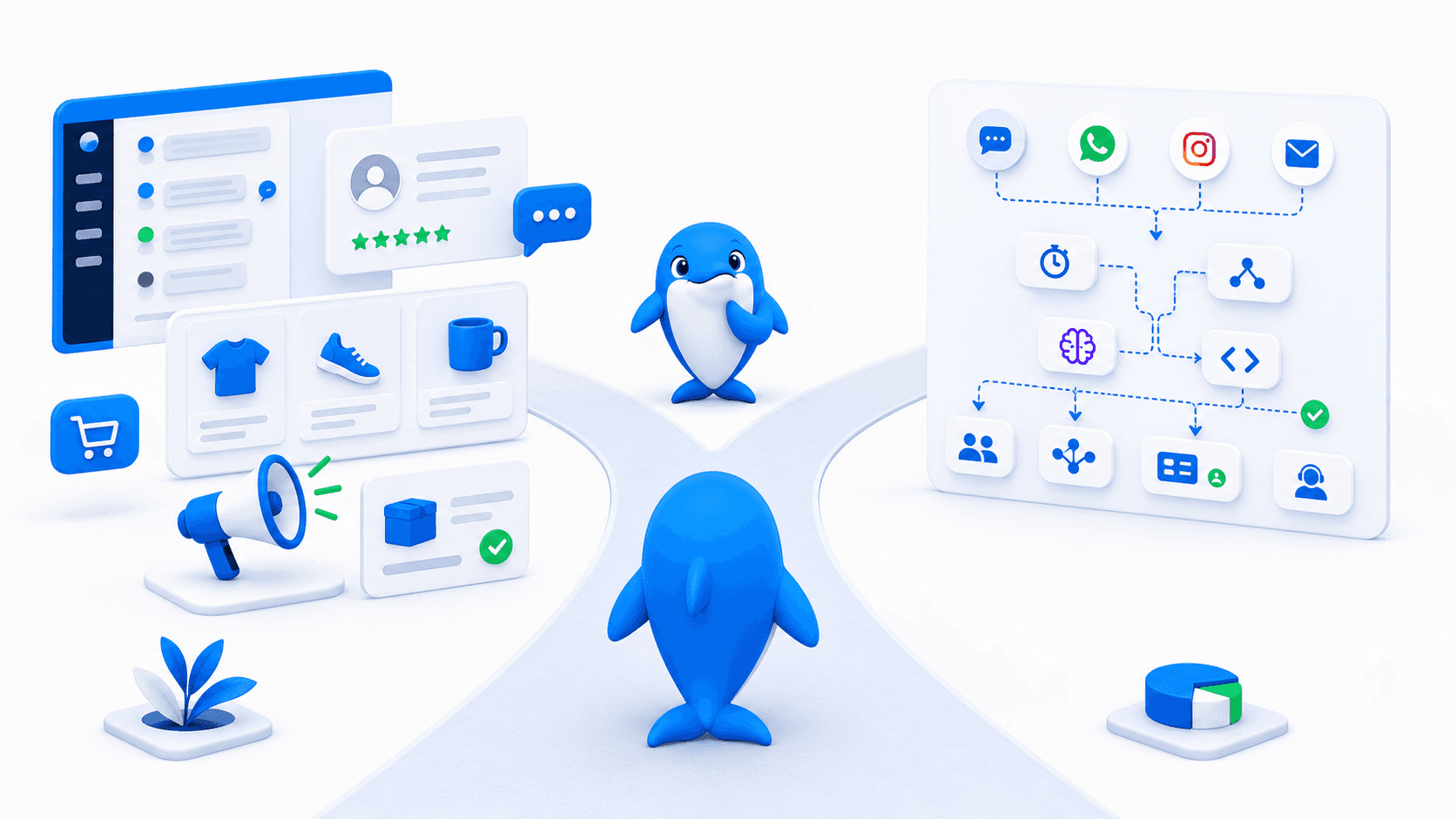
Decision Tree: Which Drift Alternative Should You Choose?
Need enterprise website pipeline and Salesforce-connected AI SDR work? Evaluate Qualified.
Need branded multi-channel chatbot delivery? Start with UChat.
Need AI-first support with a modern helpdesk? Evaluate Intercom.
Need CRM-centered sales operations? Evaluate HubSpot.
Need governed service and contact-center depth? Evaluate Zendesk.
Need a quick small-team website support launch? Evaluate Tidio.
Need predictable workspace pricing and a shared inbox? Evaluate Crisp.
Already run Salesloft and need website-to-meeting conversion? Keeping Drift may be sensible.
Key takeaway: The closest visual substitute is not always the closest operational substitute.
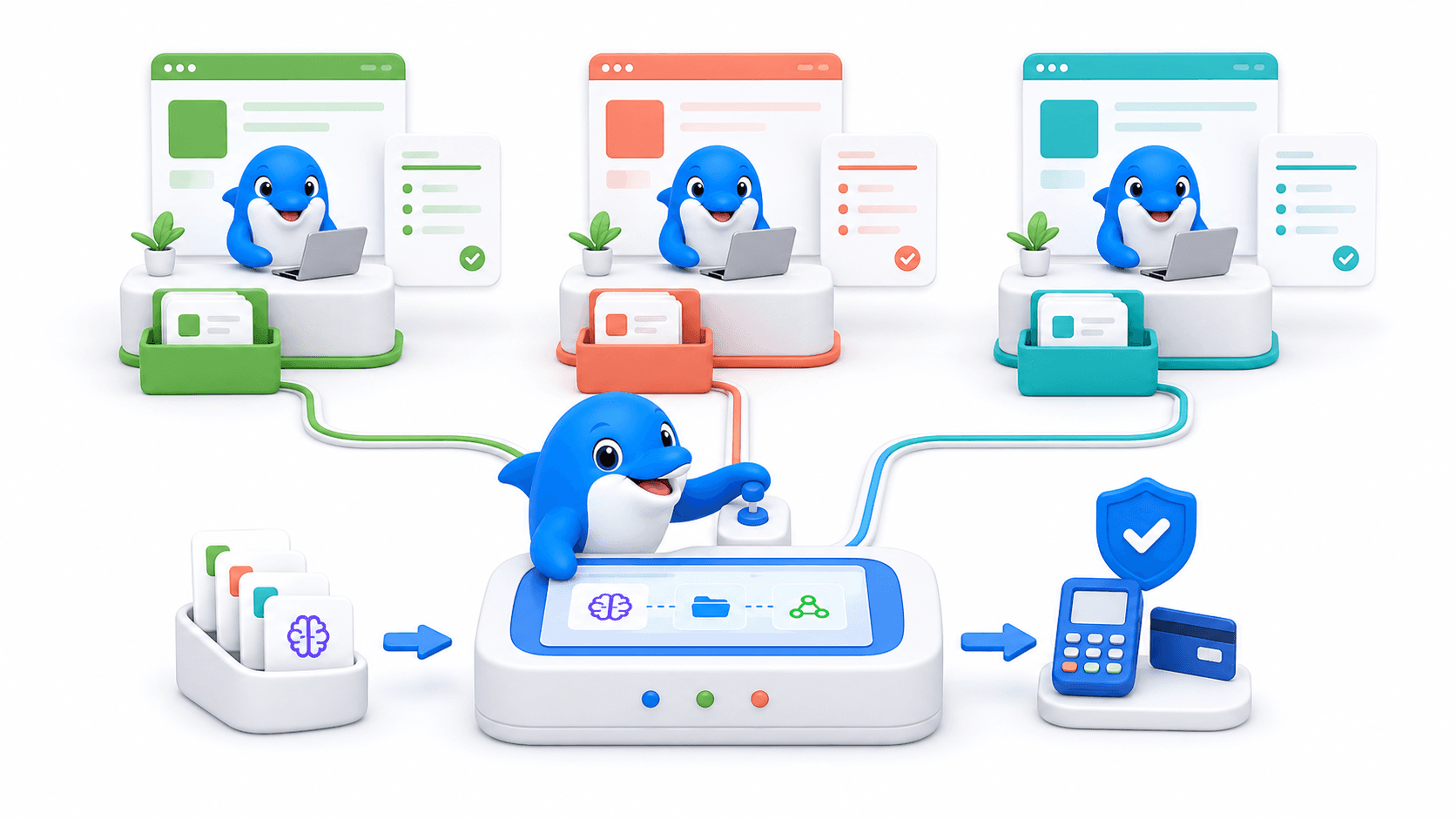
UChat Versus Drift: The Important Boundary
Drift is centered on B2B website engagement and pipeline inside a wider Salesloft revenue platform. UChat is centered on configurable AI conversation journeys across many channels, with optional white-label client delivery.
Read the detailed UChat vs Drift comparison before planning a proof of concept.
Should You Replace Drift Or Add A Specialist Layer?
There are three sensible architectures:
Keep One Revenue Platform
Keep Drift inside Salesloft when the current website-to-meeting motion is producing pipeline and sales engagement, coaching and revenue workflows benefit from staying together. The operational simplicity may be worth more than adding channel breadth.
Replace The Job With One Specialist
Choose Qualified for an enterprise website-pipeline motion, Intercom or Zendesk for service operations, HubSpot for CRM-led selling, or UChat for multi-channel conversation automation. This works when one job clearly dominates the decision.
Connect A System Of Record To A Conversation Layer
Use the CRM or revenue platform as the source of truth and connect UChat as the customer-conversation layer. Define ownership for identity, consent, qualification status, handoff, retry behavior and reporting before launch. Two tools help only when the boundary between them is explicit.
A Practical 14-Day Proof Of Concept
Do not migrate the whole website or every channel first. Use one real journey and score it against the same outcomes in each product.
Test | What to build | Pass condition |
|---|---|---|
Entry and identity | Start from one high-value web page or messaging channel | The visitor is identified or the required fields are captured without unnecessary questions |
Grounded answer | Ask five common questions and two questions the system should not guess | Approved answers are accurate and uncertain cases escalate cleanly |
Qualification | Capture fit, intent and one business-specific field | The team receives structured data it can act on |
Business action | Book a meeting, update a CRM record or call one API | The action succeeds and failure behavior is visible |
Human handoff | Trigger takeover from one agreed rule | The right person receives context without asking the customer to repeat everything |
Measurement | Review the completed journey | The team can see conversion, resolution or another agreed outcome |
Run the same scenarios against Drift or the chosen alternative. A proof of concept should answer whether the new operating model is better, not merely whether the software works.
How To Compare The Real Cost
Do not compare a public starting price with a custom enterprise quote and call the exercise complete. Model:
domains, websites or workspaces;
full agent seats and light collaborators;
AI outcomes, replies, visits or credits;
messaging, voice and email usage;
CRM and integration requirements;
implementation and migration;
agency resale margin, if applicable.
Pricing and packaging in this article were verified on official vendor pages on 5 September 2026. Recheck them immediately before purchase or publication.
Frequently Asked Questions
What is the closest Drift alternative for B2B website pipeline?
Qualified is the closest specialist in this list when the goal is an enterprise AI SDR for website conversations, meetings, email nurture and Salesforce-connected routing.
Which Drift alternative fits multiple messaging channels?
UChat is the strongest fit in this shortlist when web chat is only one entry point and the workflow must also support social, messaging, voice or partner-branded client delivery.
Which alternative fits customer support teams?
Intercom is a strong AI-first support choice, Zendesk is stronger for governed enterprise service, and Crisp or Tidio can suit smaller teams.
Is there a free Drift alternative?
HubSpot, Tidio and Crisp provide free entry routes, while UChat offers a free direct plan and a 14-day trial with Pro features. Limits and intended use differ, so a free plan is not equivalent to Drift's sales-led deployment.
Can UChat and Salesloft work together?
They can occupy different layers: Salesloft for revenue orchestration and UChat for configurable multi-channel conversations. Validate data ownership, routing and API behavior in a proof of concept before adopting the stack.
Try UChat For Your Conversation Workflow
If your Drift alternative search is really about building a branded, multi-channel automation product, explore the UChat Partner Plan.
You can also start a 14-day UChat trial with Pro features and no credit card, or book a partner demo.
Sources
Editorial disclosure: This guide is published by UChat. We recommend UChat only where its product center matches the buyer's operating model.
When you need multi-channel AI conversations or branded chatbot delivery, UChat is the first Drift alternative to consider. Choose Qualified instead when the entire brief is enterprise B2B website pipeline and Salesforce-connected AI SDR work. Intercom and Zendesk are stronger starting points for customer-service operations, while HubSpot makes more sense when CRM should own the journey.
Drift now sits inside Salesloft, so the real decision is not simply which chat widget looks similar. It is which operating model should replace the work Drift performs for you.
Bottom line: Replace the job, not the brand name.
Drift Alternatives At A Glance
Alternative | Right for whom | Replaces most directly | Important tradeoff |
|---|---|---|---|
UChat | Teams building multi-channel AI journeys and agencies packaging them for clients | Chatbots, AI qualification, workflow actions, handoff and branded client delivery | It is not Salesloft's full revenue orchestration suite |
Qualified | B2B marketing teams focused on website pipeline | AI SDR conversations, meetings, email nurture and routing | Custom pricing and a more enterprise, Salesforce-centered motion |
Intercom | Support teams that want AI plus a modern helpdesk | Messenger, inbox, tickets, knowledge and AI resolution | Seat and outcome costs both need modeling |
HubSpot Sales Hub | Teams that want CRM to anchor sales execution | CRM, pipeline, prospecting and sales automation | Broader Hub adoption can expand cost and administration |
Zendesk | Mature service teams with governance needs | Ticketing, omnichannel routing, AI agents and contact-center operations | More support-centric than pipeline-generation-centric |
Tidio | Smaller ecommerce and service teams | Website chat, Lyro AI, helpdesk and simple flows | Less suitable for complex partner delivery and deep custom workflows |
Crisp | Teams wanting predictable workspace pricing | Shared inbox, chat, omnichannel support and no-code automation | AI credits and higher-tier features still affect real cost |
How We Selected These Alternatives
We did not rank products by the length of their feature lists. We selected seven options that can credibly replace a distinct job buyers may have used Drift to perform.
The shortlist uses four filters:
A clear operating model. Each option must fit a specific buyer, such as an enterprise demand-generation team, a support organization, a CRM-led sales team or an agency delivering chatbots to clients.
Current first-party evidence. Product scope, packaging and pricing claims come from official vendor pages reviewed on 5 September 2026.
An explicit replacement boundary. We state what each product replaces well and what still requires another system.
A practical proof path. A buyer should be able to test the recommendation against a real lead or support journey, not just compare screenshots.
We did not assign a single overall score. A product designed for enterprise website pipeline should not win or lose points because it lacks agency white-label billing, just as a multi-channel automation platform should not be treated as a complete sales-engagement suite.
What Are You Actually Replacing In Drift?
Before booking demos, identify which job currently creates value. The answer changes the shortlist.
Job to replace | Evidence that this is your real need | Start with |
|---|---|---|
Website pipeline | Revenue depends on recognizing target accounts, qualifying visitors, routing reps and booking meetings | Qualified or Drift inside Salesloft |
AI SDR | The system must engage, qualify and follow up with inbound buyers across website, email or meetings | Qualified |
Customer support | Resolution, agent productivity, tickets, knowledge and service governance matter more than pipeline | Intercom or Zendesk |
CRM-centered selling | Contacts, opportunities, prospecting and reporting must live in one customer record | HubSpot Sales Hub |
Lightweight website service | A smaller team needs chat and automation live quickly, with limited solution design | Tidio or Crisp |
Multi-channel automation | The same business journey must work across web, social, messaging or voice | UChat |
Agency commercialization | You need branded client workspaces, configurable plans, billing and repeatable delivery | UChat Partner Plan |
This map also exposes a valid outcome: you may not need to replace Drift. You may need a second specialist layer while Salesloft remains the revenue system of record.
Why Teams Look For A Drift Alternative
Salesloft positions Drift around conversational marketing, target-account engagement, website chat, real-time rep routing and meeting booking. That remains valuable when the website is a major source of B2B pipeline. Salesloft pricing is quote-led, while its product terms describe Drift deployments by domain and some products by reply or site-visit volumes.
Teams usually start looking elsewhere for one of five reasons:
they need conversations beyond the website;
they are building customer support rather than B2B pipeline;
their CRM should own qualification and follow-up;
they want a lighter, self-serve product;
they want to resell automation under their own brand.
Keeping Drift may still be the right answer. If Salesloft already anchors revenue operations and the website-to-meeting journey is performing, replacing it can introduce a second system without improving the outcome.
1. UChat: For Multi-Channel And White-Label Automation
UChat fits when a conversation must continue beyond website qualification. Its AI Agents can answer with business knowledge, invoke AI Functions and hand work to other agents or people. Flow Builder adds deterministic conditions, data capture, API requests and reusable logic. Its channel coverage spans web chat, social, messaging and voice entry points.
For agencies, the Partner Plan adds custom-domain branding, configurable client plans, billing automation, separate client workspaces and Partner API operations. The public Partner Plan is $199 per month, with client workspace license costs starting at $10 per month. Direct UChat plans are separate: a team can start on Free or test Pro features during a 14-day trial.
That commercial layer turns a chatbot build into a repeatable service product rather than a collection of isolated website widgets. A representative workflow looks like this:
A prospect enters through web chat, WhatsApp, Instagram or another configured channel.
An AI Agent answers from approved business knowledge and gathers the fields needed for qualification.
Flow Builder applies conditions and triggers an integration, API request or internal action.
A human takes over when the issue needs judgment or the lead reaches an agreed threshold.
A board, ticket or connected CRM records the outcome and keeps ownership visible.
Choose UChat when the journey might begin with Instagram, WhatsApp, Messenger, voice or web chat, then continue through qualification, an external action, human handoff and CRM or ticket tracking.
The limitation matters: UChat is not a complete replacement for Salesloft's sales engagement, call coaching or broader revenue orchestration. Its advanced Flow Builder also requires someone to map fields, conditions, API actions, failure paths and handoff rules before launch; a narrow website-chat setup can demand less solution design.
Before choosing UChat, build one representative journey end to end. Test the answer source, qualification fields, one external action, one failure path, human takeover and reporting. The platform's advantage becomes meaningful only when that deeper workflow is something your team or agency will actually maintain.
2. Qualified: For Enterprise Website Pipeline
Qualified's Piper is the closest specialist alternative when the job is inbound B2B pipeline. The official product covers website conversations, email, meetings, offers, routing, Salesforce data and integrations with go-to-market systems. Pricing is customized across Premier, Enterprise and Ultimate tiers rather than shown as a self-serve monthly number.
Choose Qualified when a Salesforce-centered marketing team wants an AI SDR to identify, engage and route high-value website buyers.
This is the strongest concession in the list. For a large B2B organization whose success metric is qualified pipeline from its website, Qualified can be a more direct fit than UChat. UChat becomes more relevant when the buyer journey spans broader messaging channels or when an agency must brand and replicate the solution across clients.
3. Intercom: For AI-First Customer Service
Intercom combines Messenger, inbox, ticketing, help center and Fin AI Agent. Current annual pricing starts at $29 per full seat each month for Essential, $85 for Advanced and $132 for Expert, while Fin starts at $0.99 per outcome. A standalone Fin route can also work with an existing helpdesk.
Choose Intercom when the main job is resolving customer questions, measuring support performance and giving agents a mature service workspace.
Intercom is not a direct website-pipeline clone. It belongs here because many companies initially bought conversational marketing and later discovered that support volume, knowledge and resolution quality were the larger need.
4. HubSpot Sales Hub: For CRM-Centered Sales
HubSpot Sales Hub builds sales activity on Smart CRM. Its official catalog covers free tools plus Starter, Professional and Enterprise seats, with prospecting, pipeline, automation, reporting and AI credits varying by tier.
Choose HubSpot when every conversation should create or update a CRM record, enter a sales process and remain visible across marketing, sales and service.
HubSpot may be more coherent than a specialist chatbot when the CRM is the system of record and sales adoption is the core requirement. It is less suitable when you want a reseller-branded chatbot platform or deep cross-channel conversation logic as the product itself.
5. Zendesk: For Governed Customer Service
Zendesk's current service plans start with Support Team at $19 per agent each month when paid yearly. Suite Team starts at $55 and Suite Professional at $115, combining ticketing, messaging, live chat, voice, routing, knowledge and AI agents. AI usage is priced around successful automated outcomes.
Choose Zendesk when you need established ticket governance, routing, reporting, voice and enterprise service controls.
Zendesk can be the better choice for a service organization with strict roles, SLAs and contact-center requirements. UChat is the stronger candidate when building the automation journey and channel logic matters more than operating a large traditional helpdesk.
6. Tidio: For A Faster Small-Team Launch
Tidio combines Lyro AI Agent, live chat, helpdesk and no-code Flows. It is designed to let a smaller team put web support and ecommerce automation into production without first building a broad architecture.
Choose Tidio when time to value for website support is more important than channel breadth, partner operations or deeply customized workflow logic.
That simplicity can be an advantage. A small Shopify store may not need the configuration power of UChat or the operational weight of Zendesk. Compare Lyro and human-conversation limits against actual volume before choosing a plan.
7. Crisp: For Predictable Workspace Pricing
Crisp offers Free, Mini at $45 per workspace per month, Essentials at $95 and Plus at $295. Essentials includes ten seats, an omnichannel inbox, workflow automation and an AI chatbot; Plus adds broader AI-first support, ticketing, white labeling and more seats.
Choose Crisp when a shared inbox with flat workspace pricing and included seats is easier to budget than a per-agent model.
Crisp is especially credible for small and mid-sized support teams. UChat remains more relevant for an agency selling distinct chatbot workspaces and for workflows that put conversation automation, not the inbox, at the center.
Decision Tree: Which Drift Alternative Should You Choose?
Need enterprise website pipeline and Salesforce-connected AI SDR work? Evaluate Qualified.
Need branded multi-channel chatbot delivery? Start with UChat.
Need AI-first support with a modern helpdesk? Evaluate Intercom.
Need CRM-centered sales operations? Evaluate HubSpot.
Need governed service and contact-center depth? Evaluate Zendesk.
Need a quick small-team website support launch? Evaluate Tidio.
Need predictable workspace pricing and a shared inbox? Evaluate Crisp.
Already run Salesloft and need website-to-meeting conversion? Keeping Drift may be sensible.
Key takeaway: The closest visual substitute is not always the closest operational substitute.
UChat Versus Drift: The Important Boundary
Drift is centered on B2B website engagement and pipeline inside a wider Salesloft revenue platform. UChat is centered on configurable AI conversation journeys across many channels, with optional white-label client delivery.
Read the detailed UChat vs Drift comparison before planning a proof of concept.
Should You Replace Drift Or Add A Specialist Layer?
There are three sensible architectures:
Keep One Revenue Platform
Keep Drift inside Salesloft when the current website-to-meeting motion is producing pipeline and sales engagement, coaching and revenue workflows benefit from staying together. The operational simplicity may be worth more than adding channel breadth.
Replace The Job With One Specialist
Choose Qualified for an enterprise website-pipeline motion, Intercom or Zendesk for service operations, HubSpot for CRM-led selling, or UChat for multi-channel conversation automation. This works when one job clearly dominates the decision.
Connect A System Of Record To A Conversation Layer
Use the CRM or revenue platform as the source of truth and connect UChat as the customer-conversation layer. Define ownership for identity, consent, qualification status, handoff, retry behavior and reporting before launch. Two tools help only when the boundary between them is explicit.
A Practical 14-Day Proof Of Concept
Do not migrate the whole website or every channel first. Use one real journey and score it against the same outcomes in each product.
Test | What to build | Pass condition |
|---|---|---|
Entry and identity | Start from one high-value web page or messaging channel | The visitor is identified or the required fields are captured without unnecessary questions |
Grounded answer | Ask five common questions and two questions the system should not guess | Approved answers are accurate and uncertain cases escalate cleanly |
Qualification | Capture fit, intent and one business-specific field | The team receives structured data it can act on |
Business action | Book a meeting, update a CRM record or call one API | The action succeeds and failure behavior is visible |
Human handoff | Trigger takeover from one agreed rule | The right person receives context without asking the customer to repeat everything |
Measurement | Review the completed journey | The team can see conversion, resolution or another agreed outcome |
Run the same scenarios against Drift or the chosen alternative. A proof of concept should answer whether the new operating model is better, not merely whether the software works.
How To Compare The Real Cost
Do not compare a public starting price with a custom enterprise quote and call the exercise complete. Model:
domains, websites or workspaces;
full agent seats and light collaborators;
AI outcomes, replies, visits or credits;
messaging, voice and email usage;
CRM and integration requirements;
implementation and migration;
agency resale margin, if applicable.
Pricing and packaging in this article were verified on official vendor pages on 5 September 2026. Recheck them immediately before purchase or publication.
Frequently Asked Questions
What is the closest Drift alternative for B2B website pipeline?
Qualified is the closest specialist in this list when the goal is an enterprise AI SDR for website conversations, meetings, email nurture and Salesforce-connected routing.
Which Drift alternative fits multiple messaging channels?
UChat is the strongest fit in this shortlist when web chat is only one entry point and the workflow must also support social, messaging, voice or partner-branded client delivery.
Which alternative fits customer support teams?
Intercom is a strong AI-first support choice, Zendesk is stronger for governed enterprise service, and Crisp or Tidio can suit smaller teams.
Is there a free Drift alternative?
HubSpot, Tidio and Crisp provide free entry routes, while UChat offers a free direct plan and a 14-day trial with Pro features. Limits and intended use differ, so a free plan is not equivalent to Drift's sales-led deployment.
Can UChat and Salesloft work together?
They can occupy different layers: Salesloft for revenue orchestration and UChat for configurable multi-channel conversations. Validate data ownership, routing and API behavior in a proof of concept before adopting the stack.
Try UChat For Your Conversation Workflow
If your Drift alternative search is really about building a branded, multi-channel automation product, explore the UChat Partner Plan.
You can also start a 14-day UChat trial with Pro features and no credit card, or book a partner demo.
Sources
Editorial disclosure: This guide is published by UChat. We recommend UChat only where its product center matches the buyer's operating model.