8 minutes
UChat
Posted by
7 Voiceflow Alternatives in 2026: From Agent Design to Operations
8 minutes
Posted by
UChat
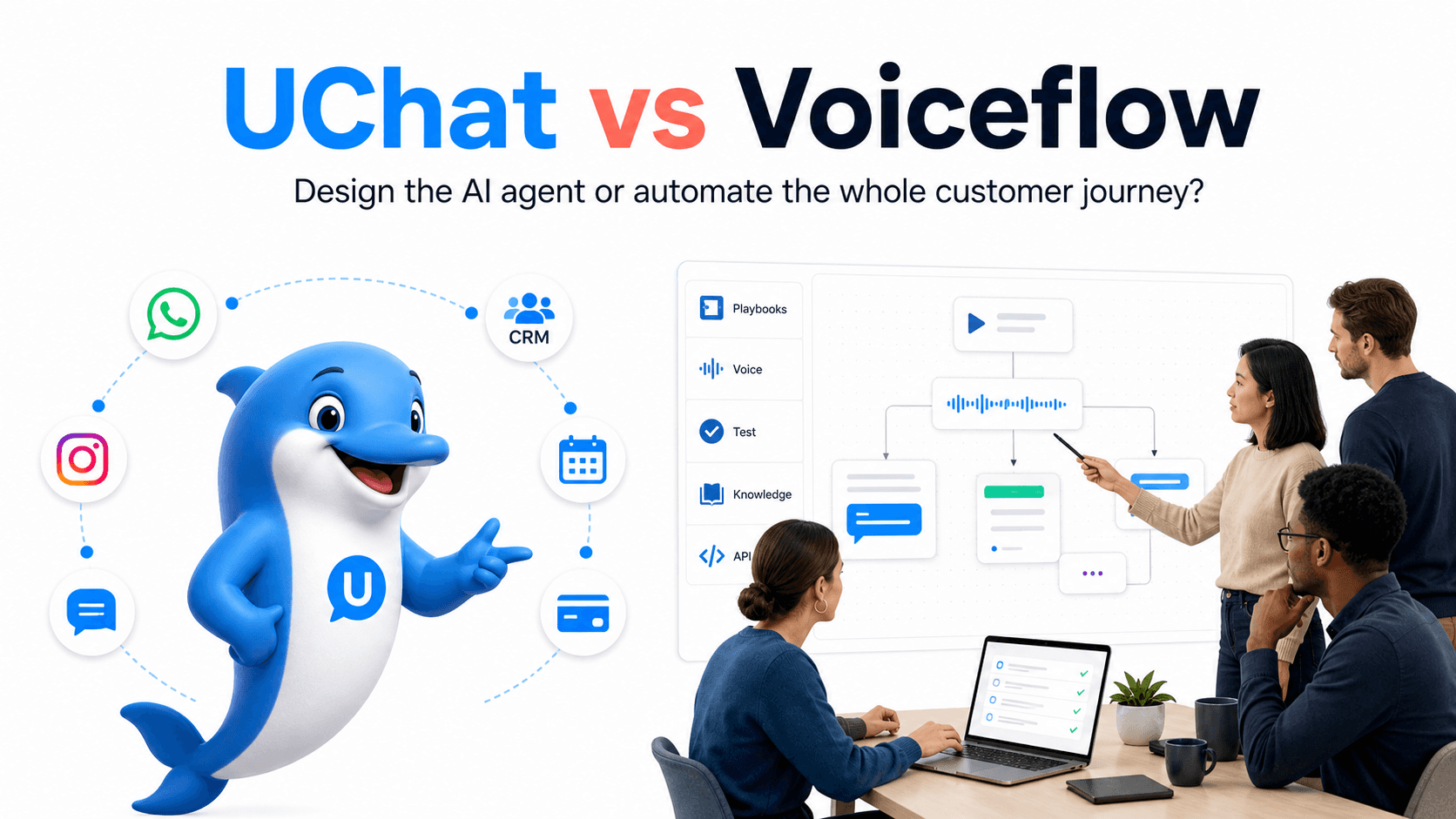
Choose UChat when AI must share one customer-operations platform. The threshold is a need for native messaging channels, live-agent handoff, CRM or tickets, and agency workspaces. Botpress fits technical Agent teams, Dialogflow CX fits Google Cloud deployments, Copilot Studio fits Microsoft organizations, Amazon Lex fits AWS-native builders, Kore.ai fits enterprise service programs, and Landbot fits accessible web and WhatsApp lead flows.
Voiceflow remains a strong choice when collaborative conversation design, prototyping and a dedicated Agent workspace are the primary job.
Bottom line: The critical decision is not which canvas looks better. It is whether you are buying an Agent design environment, a cloud service or an operational customer-automation platform.
Voiceflow Alternatives At A Glance
Alternative | Right for whom | Published model | Important tradeoff | Evidence |
|---|---|---|---|---|
UChat | Customer automation teams and agencies | Business $15; Partner $199 monthly | Channel and model-provider costs may apply | |
Botpress | Technical teams building tool-using Agents | Platform and AI usage layers | A representative workload estimate is required | |
Dialogflow CX | Google Cloud enterprises | Request and feature usage pricing | Price the surrounding Google Cloud services | |
Copilot Studio | Microsoft 365 and Power Platform teams | Tenant capacity and message consumption | Model tenant capacity and message use | |
Amazon Lex | AWS-native voice and text applications | Request-based cloud pricing | Include connected AWS services in the estimate | |
Kore.ai | Large service organizations | Sales-led enterprise platform | Requires a vendor quote | |
Landbot | Web and WhatsApp lead-generation teams | Free and paid chat allowances | Chats, AI, seats and WhatsApp are separate layers |
Table Of Contents
Voiceflow Alternatives At A Glance
How We Evaluated Voiceflow Alternatives
Why Teams Look For A Voiceflow Alternative
Capability Checkpoints
Decision Tree: Which Voiceflow Alternative Should You Choose?
How To Compare The Real Cost
Frequently Asked Questions
How We Evaluated Voiceflow Alternatives
The review used one Agent across design and production: ground an answer in approved knowledge, call a business tool, capture structured data, handle a failed tool call, transfer to a human and inspect the transcript afterward. We then checked what is native, what needs an API and what requires a second product.
Voiceflow's framework, deployment and measurement documentation were reviewed alongside pricing on 28 August 2026. This matters because Voiceflow supports playbooks, workflows, tools, web and telephony deployment, transcripts, evaluations and analytics; it should not be reduced to a prototyping canvas.
Why Teams Look For A Voiceflow Alternative
Voiceflow publishes a free Sandbox, Pro at $50 per editor monthly, Team at $125 per editor monthly and custom Enterprise. Plans vary by editors, workspaces, Agents, knowledge sources, table rows, AI usage, messages and support. Billing can also include add-ons and shared credits.
That model suits a team treating Agent design as a product discipline. Alternatives become relevant when buyers need:
native customer channels and human handoff;
deterministic workflows surrounding AI;
a specific cloud ecosystem;
infrastructure-level voice and text services;
enterprise service governance; or
a simpler lead-generation builder.
Capability Checkpoints
Buyer checkpoint | What to verify with the same Agent | Relevant evidence |
|---|---|---|
Design and testing | Collaboration, deterministic paths, reusable tools, tests and evaluations | |
Agent action | Knowledge, function calls, structured capture, guardrails and fallback | |
Deployment | Native web, messaging and voice routes plus human handoff | |
Operations | Transcripts, CRM or ticket state, ownership and client delivery |
Voiceflow may be the more coherent choice for a product team whose primary deliverable is a carefully designed Agent experience shared by designers, writers and developers.
1. UChat: For Agents That Operate Customer Journeys
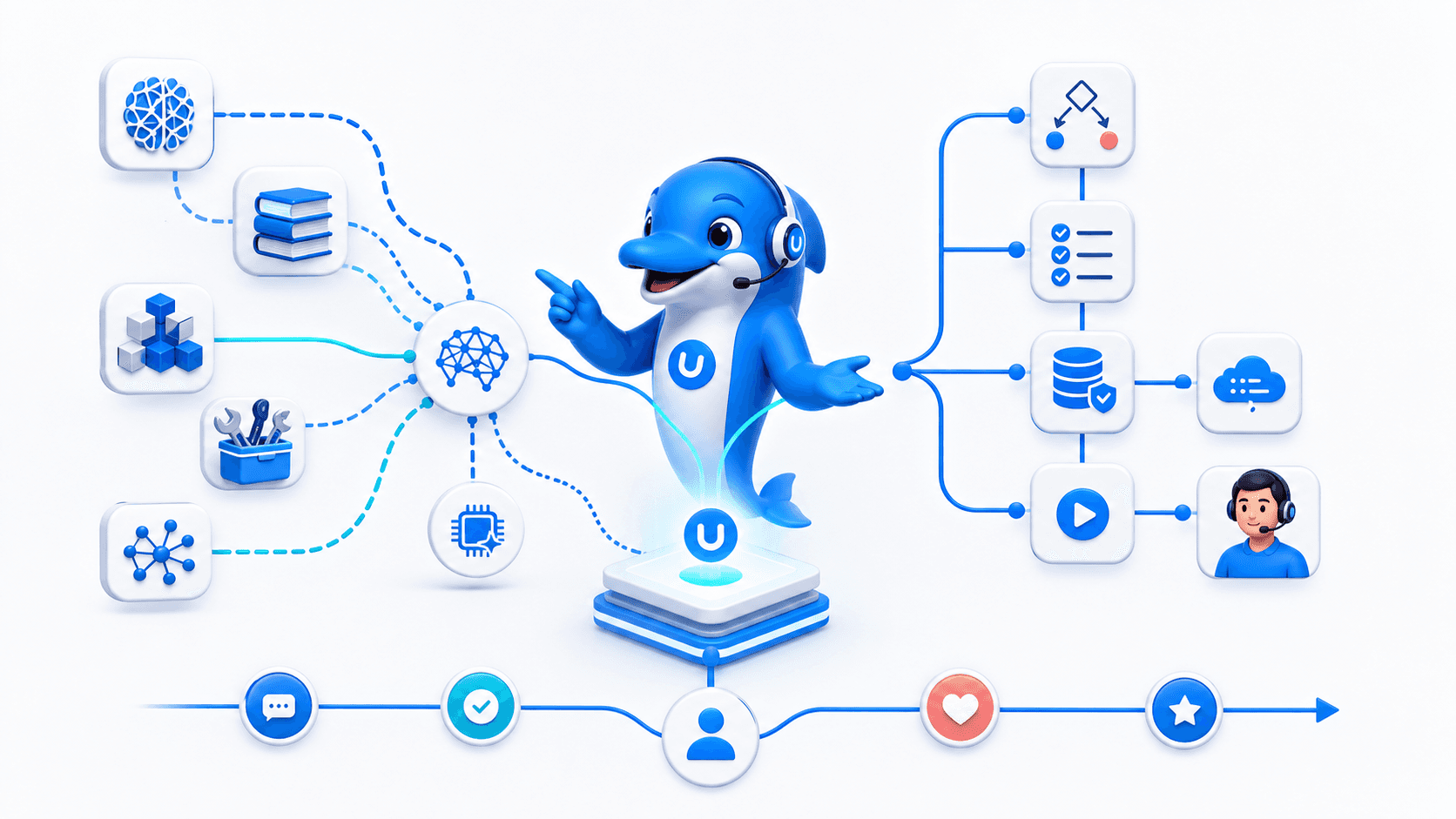
UChat combines AI Agents with deterministic visual flows. Its AI page documents personas, knowledge, model choice, functions, custom-field capture and coordinated handoff between Agents. Its public product pages add 15+ channels, contextual Live Chat, CRM Boards and Tickets, plus API, webhook, Zapier, Make and Mini App routes.
For a production test, let an Agent answer a policy question, call an availability service, save the selected slot, route a failed call to a deterministic recovery step and transfer a low-confidence case to a person with the collected context. Then verify the CRM or ticket state.
The distinction is operational control around the model. Teams can decide where AI reasons, where a deterministic flow takes over and where a person must intervene.
Business is $15 monthly with one bot, 1,000 bot users, five members, unlimited automations and unlimited conversations. Partner is $199 monthly and adds custom branding, domains, client workspaces, plans and billing; provider and model charges may still apply.
Voiceflow is often better for dedicated Agent design collaboration. UChat becomes the relevant candidate when the buying requirement explicitly includes its native channel catalog, Live Chat, CRM or Tickets, and Partner workspace controls in the same platform.
2. Botpress: For Technical Agent Development
Botpress provides knowledge, tools, workflows, integrations and developer controls for AI Agents. Its pricing includes platform and usage considerations rather than one simple per-bot fee.
It can be the more direct route for an engineering-led Agent product. Compare observability, testing, versioning, AI consumption and the external channel stack, not only builder features.
3. Google Dialogflow CX: For Google Cloud Architecture
Dialogflow CX is a Google Cloud conversational AI service with visual state-machine concepts, text and voice capabilities, and usage-based pricing.
Organizations already committed to Google Cloud may value its identity, infrastructure and procurement alignment. The tradeoff is that teams usually assemble channels, support tools, analytics and business applications around the core service.
4. Microsoft Copilot Studio: For Microsoft Organizations
Copilot Studio lets organizations create Agents connected to Microsoft services and Power Platform. Commercial use is tied to tenant capacity and message consumption.
It may be the more coherent choice where Dataverse, Teams, Dynamics and Microsoft governance already define the operating environment. Buyers outside that ecosystem should calculate the full dependency footprint.
5. Amazon Lex: For AWS-Native Voice And Text
Amazon Lex provides conversational interfaces using request-based cloud pricing and integrates with the broader AWS stack.
It is compelling when an engineering team needs infrastructure primitives and already operates in AWS. It is less turnkey for marketers or agencies expecting visual client workspaces, billing and packaged templates.
6. Kore.ai: For Enterprise Service Transformation
Kore.ai targets enterprise AI for service with governance, integrations and large-scale deployment support. Pricing is sales-led rather than a simple self-serve plan.
Large service organizations may prefer a sales-led enterprise program. Smaller teams should obtain a scoped quote and implementation plan before comparing it with self-serve products.
7. Landbot: For Accessible Lead Flows
Landbot combines visual flows, web chat, Messenger, API and paid WhatsApp options. Current plans include a free tier, Starter and Professional with chat, AI and seat allowances.
It can be the more direct choice for conversational forms, qualification and web lead capture. UChat is better suited when the journey expands into additional channels, service workflows or branded agency operations.
Decision Tree: Which Voiceflow Alternative Should You Choose?
Need AI plus native customer operations and agency delivery? Choose UChat.
Need an engineering-led Agent platform? Choose Botpress.
Standardize on Google Cloud? Choose Dialogflow CX.
Standardize on Microsoft? Choose Copilot Studio.
Build inside AWS? Choose Amazon Lex.
Need enterprise service transformation? Choose Kore.ai.
Need an accessible web or WhatsApp lead flow? Choose Landbot.
Need collaborative Agent conversation design? Keep Voiceflow.
How To Compare The Real Cost
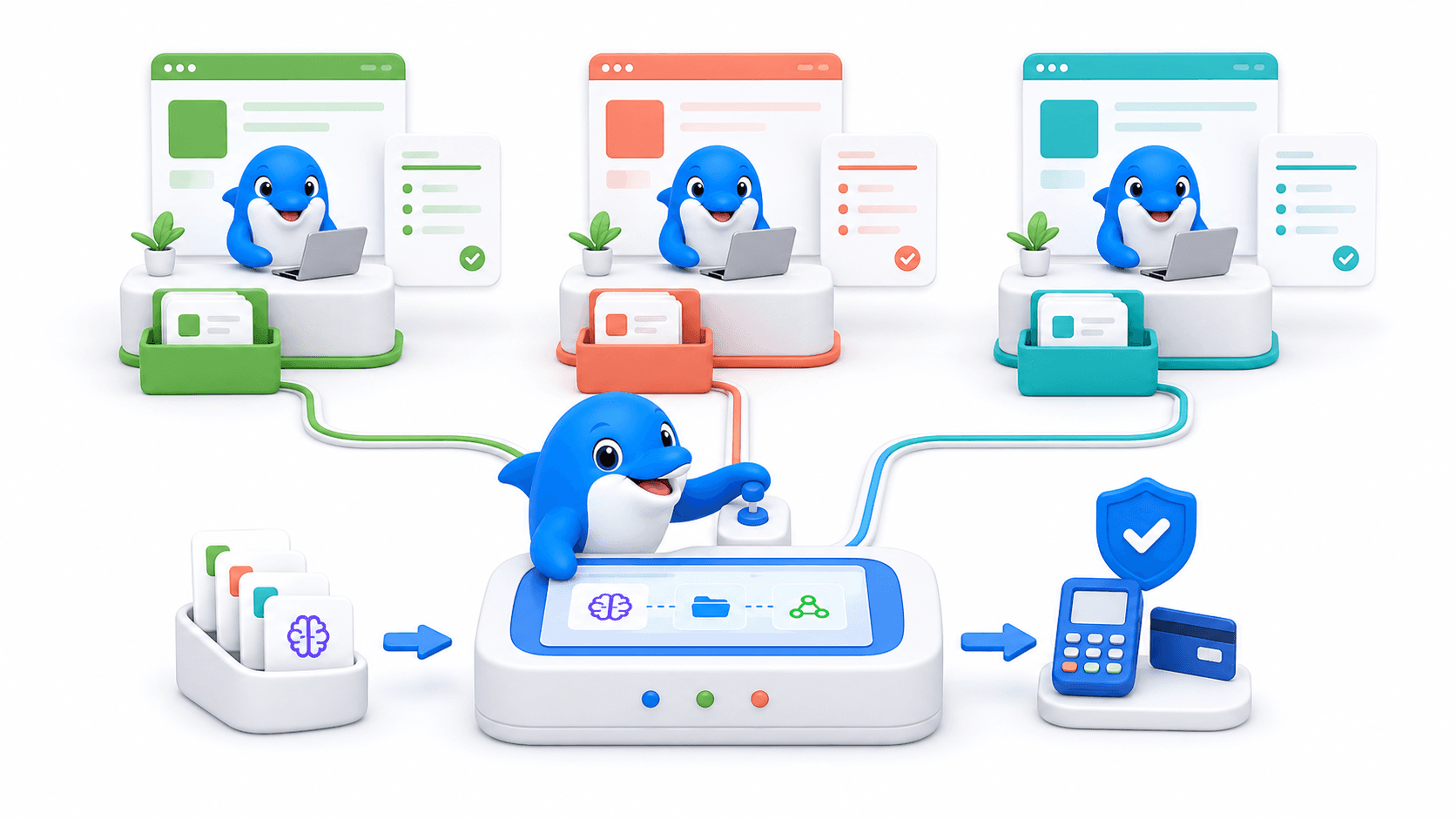
Estimate editor seats, Agent environments, monthly messages, AI usage, tool calls, knowledge storage, voice minutes, phone numbers, cloud services, support seats and implementation labor. Add separate channel and inbox products whenever those functions sit outside the Agent platform.
A $50 editor plan and a $15 business-automation plan are not equivalent units. Price the complete production architecture and run one representative Agent through a peak month.
Pricing was reviewed on official vendor pages on 28 August 2026. Recheck it before purchase.
Frequently Asked Questions
Which Voiceflow alternative is best for agencies?
UChat is the lead when agencies need their own brand, client workspaces, reusable solutions, plans and billing. Voiceflow may suit an agency selling Agent design and handing deployment into a separate stack.
Which alternative is best for enterprise cloud teams?
Dialogflow CX, Copilot Studio and Amazon Lex align with Google, Microsoft and AWS respectively. Kore.ai is a dedicated enterprise service platform. Existing governance and procurement usually matter as much as builder capability.
Can a Voiceflow Agent be migrated automatically?
Do not assume so. Inventory prompts, knowledge, variables, tools, APIs, guardrails, tests and channel adapters. Rebuild and pressure-test one representative Agent before planning a broader move.
Try UChat For AI Agents With Operational Control
Start a 14-day UChat trial with Pro features and no credit card. Read UChat vs Voiceflow, explore the AI Agent platform, or book a partner demo.
Sources
Editorial disclosure: This guide is published by UChat. Recommendations follow the use cases supported by the cited public evidence.
Choose UChat when AI must share one customer-operations platform. The threshold is a need for native messaging channels, live-agent handoff, CRM or tickets, and agency workspaces. Botpress fits technical Agent teams, Dialogflow CX fits Google Cloud deployments, Copilot Studio fits Microsoft organizations, Amazon Lex fits AWS-native builders, Kore.ai fits enterprise service programs, and Landbot fits accessible web and WhatsApp lead flows.
Voiceflow remains a strong choice when collaborative conversation design, prototyping and a dedicated Agent workspace are the primary job.
Bottom line: The critical decision is not which canvas looks better. It is whether you are buying an Agent design environment, a cloud service or an operational customer-automation platform.
Voiceflow Alternatives At A Glance
Alternative | Right for whom | Published model | Important tradeoff | Evidence |
|---|---|---|---|---|
UChat | Customer automation teams and agencies | Business $15; Partner $199 monthly | Channel and model-provider costs may apply | |
Botpress | Technical teams building tool-using Agents | Platform and AI usage layers | A representative workload estimate is required | |
Dialogflow CX | Google Cloud enterprises | Request and feature usage pricing | Price the surrounding Google Cloud services | |
Copilot Studio | Microsoft 365 and Power Platform teams | Tenant capacity and message consumption | Model tenant capacity and message use | |
Amazon Lex | AWS-native voice and text applications | Request-based cloud pricing | Include connected AWS services in the estimate | |
Kore.ai | Large service organizations | Sales-led enterprise platform | Requires a vendor quote | |
Landbot | Web and WhatsApp lead-generation teams | Free and paid chat allowances | Chats, AI, seats and WhatsApp are separate layers |
Table Of Contents
Voiceflow Alternatives At A Glance
How We Evaluated Voiceflow Alternatives
Why Teams Look For A Voiceflow Alternative
Capability Checkpoints
Decision Tree: Which Voiceflow Alternative Should You Choose?
How To Compare The Real Cost
Frequently Asked Questions
How We Evaluated Voiceflow Alternatives
The review used one Agent across design and production: ground an answer in approved knowledge, call a business tool, capture structured data, handle a failed tool call, transfer to a human and inspect the transcript afterward. We then checked what is native, what needs an API and what requires a second product.
Voiceflow's framework, deployment and measurement documentation were reviewed alongside pricing on 28 August 2026. This matters because Voiceflow supports playbooks, workflows, tools, web and telephony deployment, transcripts, evaluations and analytics; it should not be reduced to a prototyping canvas.
Why Teams Look For A Voiceflow Alternative
Voiceflow publishes a free Sandbox, Pro at $50 per editor monthly, Team at $125 per editor monthly and custom Enterprise. Plans vary by editors, workspaces, Agents, knowledge sources, table rows, AI usage, messages and support. Billing can also include add-ons and shared credits.
That model suits a team treating Agent design as a product discipline. Alternatives become relevant when buyers need:
native customer channels and human handoff;
deterministic workflows surrounding AI;
a specific cloud ecosystem;
infrastructure-level voice and text services;
enterprise service governance; or
a simpler lead-generation builder.
Capability Checkpoints
Buyer checkpoint | What to verify with the same Agent | Relevant evidence |
|---|---|---|
Design and testing | Collaboration, deterministic paths, reusable tools, tests and evaluations | |
Agent action | Knowledge, function calls, structured capture, guardrails and fallback | |
Deployment | Native web, messaging and voice routes plus human handoff | |
Operations | Transcripts, CRM or ticket state, ownership and client delivery |
Voiceflow may be the more coherent choice for a product team whose primary deliverable is a carefully designed Agent experience shared by designers, writers and developers.
1. UChat: For Agents That Operate Customer Journeys
UChat combines AI Agents with deterministic visual flows. Its AI page documents personas, knowledge, model choice, functions, custom-field capture and coordinated handoff between Agents. Its public product pages add 15+ channels, contextual Live Chat, CRM Boards and Tickets, plus API, webhook, Zapier, Make and Mini App routes.
For a production test, let an Agent answer a policy question, call an availability service, save the selected slot, route a failed call to a deterministic recovery step and transfer a low-confidence case to a person with the collected context. Then verify the CRM or ticket state.
The distinction is operational control around the model. Teams can decide where AI reasons, where a deterministic flow takes over and where a person must intervene.
Business is $15 monthly with one bot, 1,000 bot users, five members, unlimited automations and unlimited conversations. Partner is $199 monthly and adds custom branding, domains, client workspaces, plans and billing; provider and model charges may still apply.
Voiceflow is often better for dedicated Agent design collaboration. UChat becomes the relevant candidate when the buying requirement explicitly includes its native channel catalog, Live Chat, CRM or Tickets, and Partner workspace controls in the same platform.
2. Botpress: For Technical Agent Development
Botpress provides knowledge, tools, workflows, integrations and developer controls for AI Agents. Its pricing includes platform and usage considerations rather than one simple per-bot fee.
It can be the more direct route for an engineering-led Agent product. Compare observability, testing, versioning, AI consumption and the external channel stack, not only builder features.
3. Google Dialogflow CX: For Google Cloud Architecture
Dialogflow CX is a Google Cloud conversational AI service with visual state-machine concepts, text and voice capabilities, and usage-based pricing.
Organizations already committed to Google Cloud may value its identity, infrastructure and procurement alignment. The tradeoff is that teams usually assemble channels, support tools, analytics and business applications around the core service.
4. Microsoft Copilot Studio: For Microsoft Organizations
Copilot Studio lets organizations create Agents connected to Microsoft services and Power Platform. Commercial use is tied to tenant capacity and message consumption.
It may be the more coherent choice where Dataverse, Teams, Dynamics and Microsoft governance already define the operating environment. Buyers outside that ecosystem should calculate the full dependency footprint.
5. Amazon Lex: For AWS-Native Voice And Text
Amazon Lex provides conversational interfaces using request-based cloud pricing and integrates with the broader AWS stack.
It is compelling when an engineering team needs infrastructure primitives and already operates in AWS. It is less turnkey for marketers or agencies expecting visual client workspaces, billing and packaged templates.
6. Kore.ai: For Enterprise Service Transformation
Kore.ai targets enterprise AI for service with governance, integrations and large-scale deployment support. Pricing is sales-led rather than a simple self-serve plan.
Large service organizations may prefer a sales-led enterprise program. Smaller teams should obtain a scoped quote and implementation plan before comparing it with self-serve products.
7. Landbot: For Accessible Lead Flows
Landbot combines visual flows, web chat, Messenger, API and paid WhatsApp options. Current plans include a free tier, Starter and Professional with chat, AI and seat allowances.
It can be the more direct choice for conversational forms, qualification and web lead capture. UChat is better suited when the journey expands into additional channels, service workflows or branded agency operations.
Decision Tree: Which Voiceflow Alternative Should You Choose?
Need AI plus native customer operations and agency delivery? Choose UChat.
Need an engineering-led Agent platform? Choose Botpress.
Standardize on Google Cloud? Choose Dialogflow CX.
Standardize on Microsoft? Choose Copilot Studio.
Build inside AWS? Choose Amazon Lex.
Need enterprise service transformation? Choose Kore.ai.
Need an accessible web or WhatsApp lead flow? Choose Landbot.
Need collaborative Agent conversation design? Keep Voiceflow.
How To Compare The Real Cost
Estimate editor seats, Agent environments, monthly messages, AI usage, tool calls, knowledge storage, voice minutes, phone numbers, cloud services, support seats and implementation labor. Add separate channel and inbox products whenever those functions sit outside the Agent platform.
A $50 editor plan and a $15 business-automation plan are not equivalent units. Price the complete production architecture and run one representative Agent through a peak month.
Pricing was reviewed on official vendor pages on 28 August 2026. Recheck it before purchase.
Frequently Asked Questions
Which Voiceflow alternative is best for agencies?
UChat is the lead when agencies need their own brand, client workspaces, reusable solutions, plans and billing. Voiceflow may suit an agency selling Agent design and handing deployment into a separate stack.
Which alternative is best for enterprise cloud teams?
Dialogflow CX, Copilot Studio and Amazon Lex align with Google, Microsoft and AWS respectively. Kore.ai is a dedicated enterprise service platform. Existing governance and procurement usually matter as much as builder capability.
Can a Voiceflow Agent be migrated automatically?
Do not assume so. Inventory prompts, knowledge, variables, tools, APIs, guardrails, tests and channel adapters. Rebuild and pressure-test one representative Agent before planning a broader move.
Try UChat For AI Agents With Operational Control
Start a 14-day UChat trial with Pro features and no credit card. Read UChat vs Voiceflow, explore the AI Agent platform, or book a partner demo.
Sources
Editorial disclosure: This guide is published by UChat. Recommendations follow the use cases supported by the cited public evidence.