9 minutes
UChat
Posted by
7 BotStar Alternatives in 2026 for AI and Customer Automation
9 minutes
Posted by
UChat

Choose UChat when the replacement must operate beyond one bot. The threshold is a need for AI functions, native customer channels, human handoff, CRM or tickets, and client workspaces. Landbot is approachable for web and WhatsApp lead flows, Botpress and Voiceflow focus on AI Agent building, Tidio fits web support, ManyChat fits social campaigns, and Chatbase fits knowledge-trained website Agents.
BotStar remains worth considering for a low-cost visual bot with CMS content, human handoff, scripting and API access.
Bottom line: Decide whether you need a bot builder, an AI Agent development environment, a support product or a reusable customer-journey platform.
BotStar Alternatives At A Glance
Alternative | Right for whom | Published model | Important tradeoff | Evidence |
|---|---|---|---|---|
UChat | Multi-channel automation teams and agencies | Business $15; Partner $199 monthly | Requires more solution design | |
Landbot | Lead-generation teams using web and WhatsApp | Free, Starter and Professional plus usage | Chat, AI and WhatsApp allowances are separate | |
Botpress | Technical teams building autonomous AI Agents | Usage-based AI Agent platform | A workload estimate is required | |
Voiceflow | Collaborative AI Agent design teams | Per-editor plans plus credits | Editors and AI consumption both affect cost | |
Tidio | Ecommerce and SMB website support | Service plans plus Lyro AI usage | Service and AI capacity are priced separately | |
ManyChat | Instagram and Messenger marketers | Contact-based social automation | Campaign reach changes the contact tier | |
Chatbase | Teams deploying knowledge-trained website Agents | Message-credit plans | Messages, Agents and seats vary by plan |
Table Of Contents
BotStar Alternatives At A Glance
How We Evaluated BotStar Alternatives
Why Teams Look For A BotStar Alternative
Capability Checkpoints
Decision Tree: Which BotStar Alternative Should You Choose?
How To Compare The Real Cost
Frequently Asked Questions
How We Evaluated BotStar Alternatives
We used one production scenario: answer from approved knowledge, collect structured details, call an external service, recover from a failed call, transfer to a person with context and report what happened. For agencies, we added a second test: clone, brand and maintain the solution across client environments.
Official pricing and documentation were captured on 28 August 2026. BotStar's block and integration docs were checked separately from its pricing page so scripting, HTTP, CRM and automation claims did not depend on marketing copy alone.
Why Teams Look For A BotStar Alternative
BotStar publishes a free plan with one active bot, 100 monthly sessions and one seat. Pro is $29 monthly for one bot, 1,000 sessions and unlimited member seats. Agency is $299 monthly for three bots, 5,000 sessions, permissions, app branding and template exporting or cloning.
The platform also documents visual blocks, Dynamic CMS, human takeover, scripting, HTTP requests, message APIs and integrations. It is not accurate to describe BotStar as a builder with no technical extension path.
Alternatives become relevant when buyers need:
current generative AI Agent tooling;
more production channels;
support inbox and ecommerce workflows;
deeper social campaign patterns;
knowledge-first deployment; or
a stronger multi-client business model.
Capability Checkpoints
Buyer checkpoint | What to verify in a proof of concept | Relevant evidence |
|---|---|---|
Visual control | Branches, variables, reusable blocks, error paths and version management | |
AI behavior | Knowledge grounding, tool calls, structured capture and escalation | |
Production operation | Native channels, human routing, CRM records and integration monitoring | |
Agency maintenance | Branding, permissions, cloning, client workspaces and billing |
1. UChat: For Production Customer Journeys
UChat's visual Flow Builder combines messages, questions, conditions, actions and external requests. AI Agents add business knowledge, custom-field capture, functions and coordinated handoff. UChat also documents 15+ channels, contextual Live Chat, CRM Boards and Tickets, plus API, webhook, Zapier, Make and Mini App extension routes.
One useful acceptance test is a booking journey: identify the customer, collect required fields, call availability through an external request, create the booking, update the CRM board and route an exception to a person. Log each failure state. This reveals more than a generic claim that both products support integrations.
UChat is strongest when automation must keep working after the answer is generated. It supports a broader journey rather than treating the bot as one isolated widget.
Business is $15 monthly with one bot, 1,000 bot users, five members, unlimited automations and unlimited conversations. Partner is $199 monthly and adds custom branding, domains, client workspaces, plan controls and billing; external channel and AI-provider costs may still apply.
BotStar may be the more economical route for one small bot with predictable sessions. UChat becomes more compelling as channel breadth, business actions and client delivery grow.
2. Landbot: For Web And WhatsApp Lead Flows
Landbot combines a visual builder with web chat, Messenger, API and WhatsApp options. Its current pricing publishes a free tier, Starter at EUR 40 monthly, Professional at EUR 100 monthly and a WhatsApp addition at EUR 100 monthly, with chat and AI allowances. Choose it when the deliverable is a visual web or WhatsApp lead experience rather than a broader service operation.
It can be the more direct choice for conversational forms and lead qualification. Model AI chats, normal chats, seats and WhatsApp together before comparing it with a session-based BotStar plan.
3. Botpress: For Technical AI Agent Teams
Botpress focuses on building and operating AI Agents with knowledge, tools, workflows and developer controls. Its commercial model includes usage layers, so the final cost depends on the Agent's workload rather than one simple bot count. Choose it when an engineering team owns Agent behavior, deployment and usage monitoring.
Technical AI teams may prefer that orientation. UChat is more relevant when native channels, human service, CRM and white-label delivery need to live in one business platform.
4. Voiceflow: For Collaborative Agent Design
Voiceflow gives product teams a structured environment for designing, testing and collaborating on AI Agents. Sandbox is free, Pro is $50 per editor monthly and Team is $125 per editor monthly, with workspace, Agent, AI-usage and message allowances. Choose it when conversation design artifacts and cross-functional review are central deliverables.
Voiceflow can be the more coherent choice for cross-functional Agent prototyping and conversation design. Deployment teams should still model the surrounding channel, inbox, CRM and client-management stack.
5. Tidio: For Website Support And Ecommerce
Tidio combines live chat, helpdesk tools, automation and Lyro AI around website customer service. Its pricing separates service capacity and AI conversation usage. Choose it when the acceptance test is faster handling of a website support queue.
That focus is valuable for a small ecommerce or support team. UChat offers a broader automation architecture, while Tidio may require less setup when the main goal is improving a website support queue.
6. ManyChat: For Social Campaigns
ManyChat centers social acquisition and messaging automation, especially Instagram and Messenger. Choose it when the customer path begins with an Instagram comment or DM and the campaign remains inside that social motion.
Check contact growth and account structure at the expected campaign scale. Teams expanding into complex service, voice, payments or agency workspaces may outgrow a social-first operating model.
7. Chatbase: For Knowledge-Trained Website Agents
Chatbase trains an Agent on business content and deploys it for customer questions, with actions and analytics around the Agent. Choose it when grounded answers are the primary workload and deterministic process steps are secondary. Plans are organized around message credits, Agents, seats and integrations.
It is a useful candidate when reliable retrieval is the center of the project. UChat is stronger when deterministic steps, channel journeys and business actions are equally important.
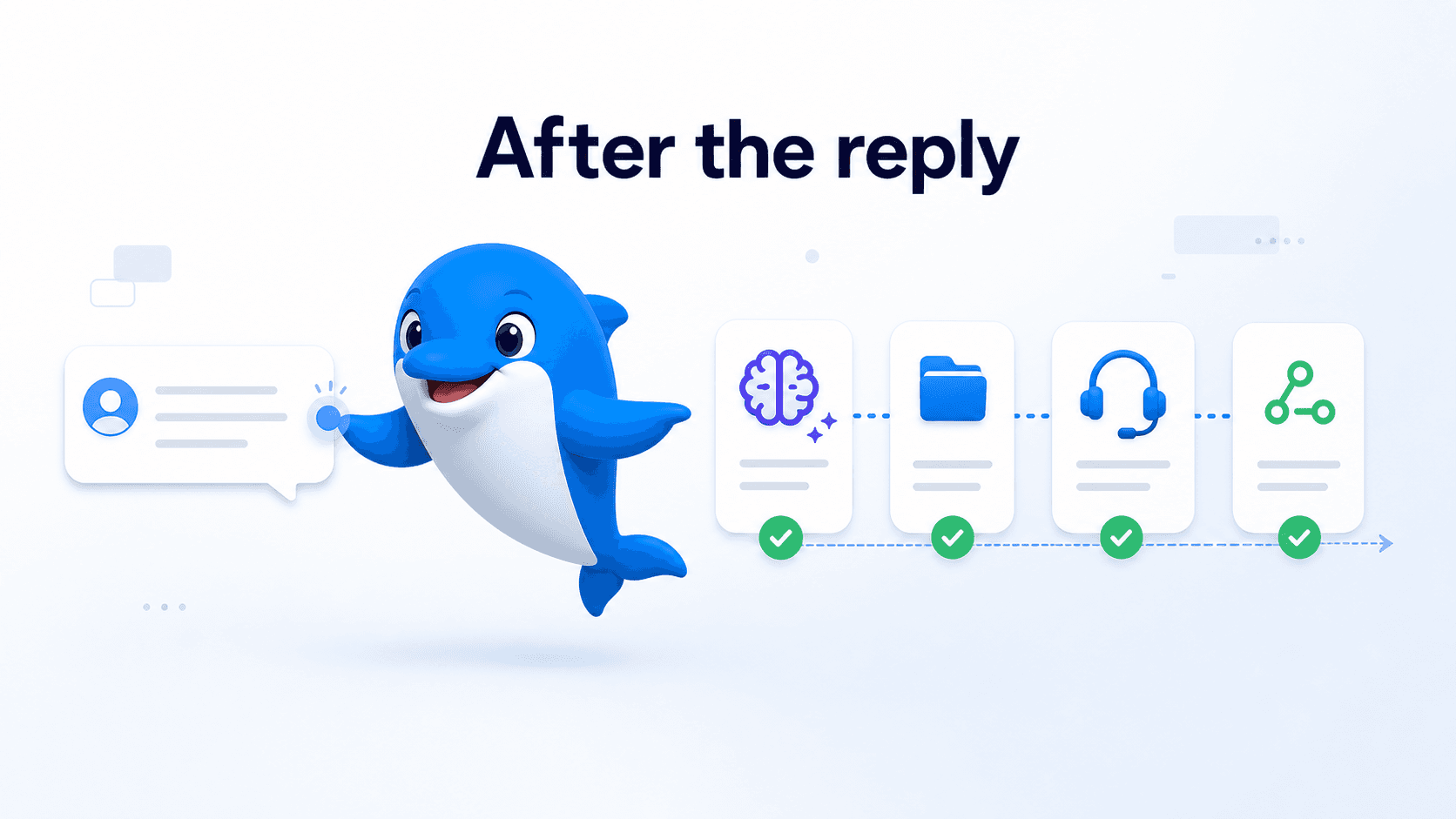
Decision Tree: Which BotStar Alternative Should You Choose?
Need multi-channel workflows or white-label client delivery? Choose UChat.
Need visual web and WhatsApp lead capture? Choose Landbot.
Need a technical AI Agent runtime? Choose Botpress.
Need collaborative Agent design? Choose Voiceflow.
Need website support and ecommerce chat? Choose Tidio.
Need social campaign automation? Choose ManyChat.
Need a knowledge-trained website Agent? Choose Chatbase.
Need one inexpensive visual bot with developer extensions? Keep BotStar.
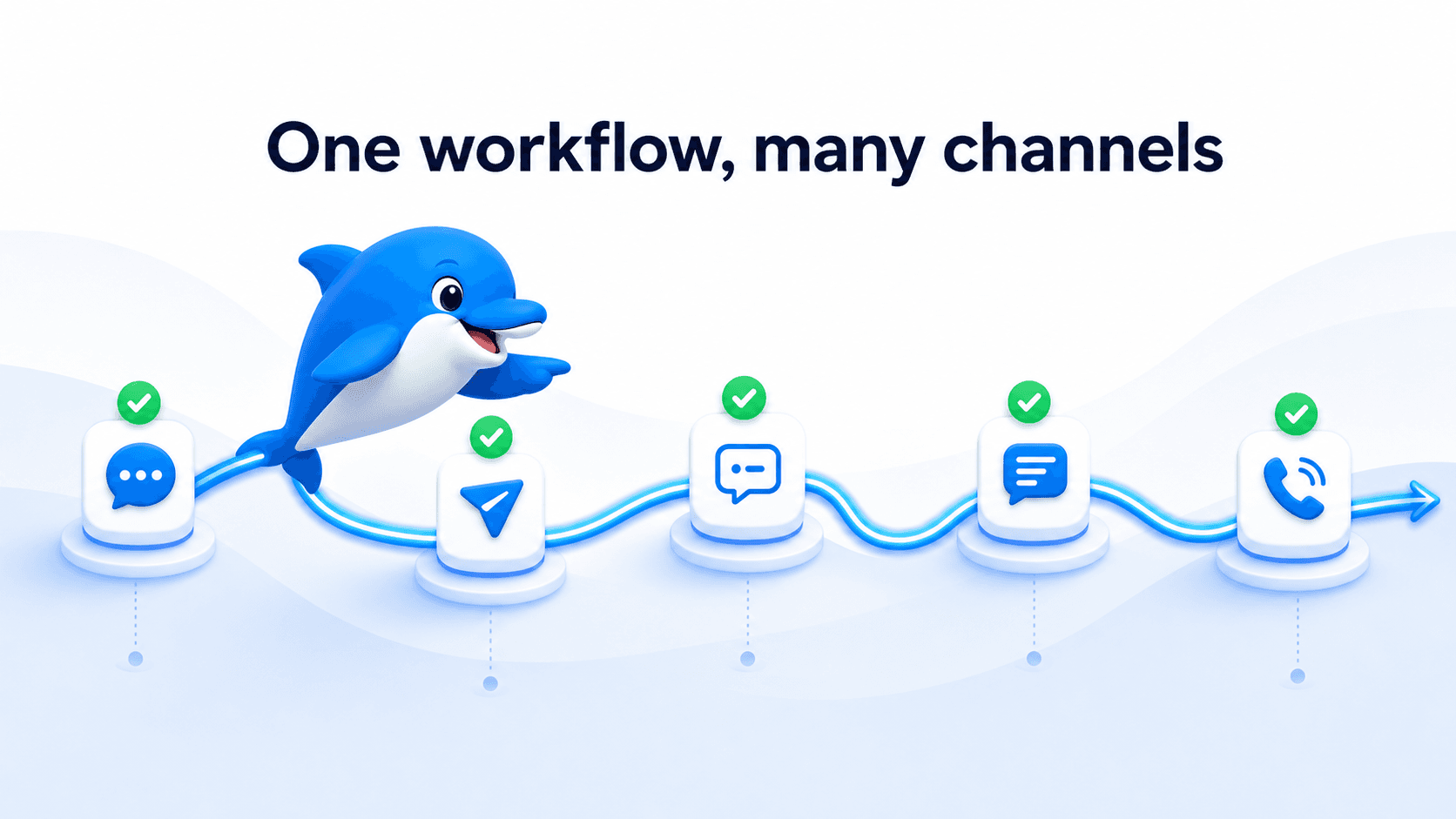
How To Compare The Real Cost
Model monthly sessions or contacts, AI usage and outcomes, human seats, channels, WhatsApp charges, implementation time, integrations and the number of client environments. Run a representative workload through each pricing model.
BotStar's $29 Pro price is useful context, not a complete replacement quote. Compare one bot and 1,000 sessions with the actual production capacity, AI work and channels required from each alternative.
Pricing was reviewed on official vendor pages on 28 August 2026. Recheck it before purchase.
Frequently Asked Questions
Which BotStar alternative fits agencies?
UChat is the lead choice when the agency wants branded client workspaces, reusable solutions, plan controls and billing. BotStar Agency remains worth testing for a smaller template-cloning operation.
Which option is closest to BotStar's visual builder?
UChat and Landbot are the closest visual business-automation candidates in this shortlist. Voiceflow and Botpress shift the center toward AI Agent design and runtime.
Can BotStar flows be imported directly?
Do not assume so. Inventory blocks, variables, CMS records, scripts, API calls and integrations, then rebuild one high-value journey and compare behavior before migrating more bots.
Try UChat For Automation Beyond One Bot
Start a 14-day UChat trial with Pro features and no credit card. A dedicated UChat vs BotStar head-to-head has not yet been published, so this alternatives guide is the current BotStar decision resource. For adjacent analysis, read UChat vs Botpress and UChat vs Voiceflow. Agencies can explore the Partner Plan or book a partner demo.
Sources
Editorial disclosure: This guide is published by UChat. Recommendations follow the use cases supported by the cited public evidence.
Choose UChat when the replacement must operate beyond one bot. The threshold is a need for AI functions, native customer channels, human handoff, CRM or tickets, and client workspaces. Landbot is approachable for web and WhatsApp lead flows, Botpress and Voiceflow focus on AI Agent building, Tidio fits web support, ManyChat fits social campaigns, and Chatbase fits knowledge-trained website Agents.
BotStar remains worth considering for a low-cost visual bot with CMS content, human handoff, scripting and API access.
Bottom line: Decide whether you need a bot builder, an AI Agent development environment, a support product or a reusable customer-journey platform.
BotStar Alternatives At A Glance
Alternative | Right for whom | Published model | Important tradeoff | Evidence |
|---|---|---|---|---|
UChat | Multi-channel automation teams and agencies | Business $15; Partner $199 monthly | Requires more solution design | |
Landbot | Lead-generation teams using web and WhatsApp | Free, Starter and Professional plus usage | Chat, AI and WhatsApp allowances are separate | |
Botpress | Technical teams building autonomous AI Agents | Usage-based AI Agent platform | A workload estimate is required | |
Voiceflow | Collaborative AI Agent design teams | Per-editor plans plus credits | Editors and AI consumption both affect cost | |
Tidio | Ecommerce and SMB website support | Service plans plus Lyro AI usage | Service and AI capacity are priced separately | |
ManyChat | Instagram and Messenger marketers | Contact-based social automation | Campaign reach changes the contact tier | |
Chatbase | Teams deploying knowledge-trained website Agents | Message-credit plans | Messages, Agents and seats vary by plan |
Table Of Contents
BotStar Alternatives At A Glance
How We Evaluated BotStar Alternatives
Why Teams Look For A BotStar Alternative
Capability Checkpoints
Decision Tree: Which BotStar Alternative Should You Choose?
How To Compare The Real Cost
Frequently Asked Questions
How We Evaluated BotStar Alternatives
We used one production scenario: answer from approved knowledge, collect structured details, call an external service, recover from a failed call, transfer to a person with context and report what happened. For agencies, we added a second test: clone, brand and maintain the solution across client environments.
Official pricing and documentation were captured on 28 August 2026. BotStar's block and integration docs were checked separately from its pricing page so scripting, HTTP, CRM and automation claims did not depend on marketing copy alone.
Why Teams Look For A BotStar Alternative
BotStar publishes a free plan with one active bot, 100 monthly sessions and one seat. Pro is $29 monthly for one bot, 1,000 sessions and unlimited member seats. Agency is $299 monthly for three bots, 5,000 sessions, permissions, app branding and template exporting or cloning.
The platform also documents visual blocks, Dynamic CMS, human takeover, scripting, HTTP requests, message APIs and integrations. It is not accurate to describe BotStar as a builder with no technical extension path.
Alternatives become relevant when buyers need:
current generative AI Agent tooling;
more production channels;
support inbox and ecommerce workflows;
deeper social campaign patterns;
knowledge-first deployment; or
a stronger multi-client business model.
Capability Checkpoints
Buyer checkpoint | What to verify in a proof of concept | Relevant evidence |
|---|---|---|
Visual control | Branches, variables, reusable blocks, error paths and version management | |
AI behavior | Knowledge grounding, tool calls, structured capture and escalation | |
Production operation | Native channels, human routing, CRM records and integration monitoring | |
Agency maintenance | Branding, permissions, cloning, client workspaces and billing |
1. UChat: For Production Customer Journeys
UChat's visual Flow Builder combines messages, questions, conditions, actions and external requests. AI Agents add business knowledge, custom-field capture, functions and coordinated handoff. UChat also documents 15+ channels, contextual Live Chat, CRM Boards and Tickets, plus API, webhook, Zapier, Make and Mini App extension routes.
One useful acceptance test is a booking journey: identify the customer, collect required fields, call availability through an external request, create the booking, update the CRM board and route an exception to a person. Log each failure state. This reveals more than a generic claim that both products support integrations.
UChat is strongest when automation must keep working after the answer is generated. It supports a broader journey rather than treating the bot as one isolated widget.
Business is $15 monthly with one bot, 1,000 bot users, five members, unlimited automations and unlimited conversations. Partner is $199 monthly and adds custom branding, domains, client workspaces, plan controls and billing; external channel and AI-provider costs may still apply.
BotStar may be the more economical route for one small bot with predictable sessions. UChat becomes more compelling as channel breadth, business actions and client delivery grow.
2. Landbot: For Web And WhatsApp Lead Flows
Landbot combines a visual builder with web chat, Messenger, API and WhatsApp options. Its current pricing publishes a free tier, Starter at EUR 40 monthly, Professional at EUR 100 monthly and a WhatsApp addition at EUR 100 monthly, with chat and AI allowances. Choose it when the deliverable is a visual web or WhatsApp lead experience rather than a broader service operation.
It can be the more direct choice for conversational forms and lead qualification. Model AI chats, normal chats, seats and WhatsApp together before comparing it with a session-based BotStar plan.
3. Botpress: For Technical AI Agent Teams
Botpress focuses on building and operating AI Agents with knowledge, tools, workflows and developer controls. Its commercial model includes usage layers, so the final cost depends on the Agent's workload rather than one simple bot count. Choose it when an engineering team owns Agent behavior, deployment and usage monitoring.
Technical AI teams may prefer that orientation. UChat is more relevant when native channels, human service, CRM and white-label delivery need to live in one business platform.
4. Voiceflow: For Collaborative Agent Design
Voiceflow gives product teams a structured environment for designing, testing and collaborating on AI Agents. Sandbox is free, Pro is $50 per editor monthly and Team is $125 per editor monthly, with workspace, Agent, AI-usage and message allowances. Choose it when conversation design artifacts and cross-functional review are central deliverables.
Voiceflow can be the more coherent choice for cross-functional Agent prototyping and conversation design. Deployment teams should still model the surrounding channel, inbox, CRM and client-management stack.
5. Tidio: For Website Support And Ecommerce
Tidio combines live chat, helpdesk tools, automation and Lyro AI around website customer service. Its pricing separates service capacity and AI conversation usage. Choose it when the acceptance test is faster handling of a website support queue.
That focus is valuable for a small ecommerce or support team. UChat offers a broader automation architecture, while Tidio may require less setup when the main goal is improving a website support queue.
6. ManyChat: For Social Campaigns
ManyChat centers social acquisition and messaging automation, especially Instagram and Messenger. Choose it when the customer path begins with an Instagram comment or DM and the campaign remains inside that social motion.
Check contact growth and account structure at the expected campaign scale. Teams expanding into complex service, voice, payments or agency workspaces may outgrow a social-first operating model.
7. Chatbase: For Knowledge-Trained Website Agents
Chatbase trains an Agent on business content and deploys it for customer questions, with actions and analytics around the Agent. Choose it when grounded answers are the primary workload and deterministic process steps are secondary. Plans are organized around message credits, Agents, seats and integrations.
It is a useful candidate when reliable retrieval is the center of the project. UChat is stronger when deterministic steps, channel journeys and business actions are equally important.
Decision Tree: Which BotStar Alternative Should You Choose?
Need multi-channel workflows or white-label client delivery? Choose UChat.
Need visual web and WhatsApp lead capture? Choose Landbot.
Need a technical AI Agent runtime? Choose Botpress.
Need collaborative Agent design? Choose Voiceflow.
Need website support and ecommerce chat? Choose Tidio.
Need social campaign automation? Choose ManyChat.
Need a knowledge-trained website Agent? Choose Chatbase.
Need one inexpensive visual bot with developer extensions? Keep BotStar.
How To Compare The Real Cost
Model monthly sessions or contacts, AI usage and outcomes, human seats, channels, WhatsApp charges, implementation time, integrations and the number of client environments. Run a representative workload through each pricing model.
BotStar's $29 Pro price is useful context, not a complete replacement quote. Compare one bot and 1,000 sessions with the actual production capacity, AI work and channels required from each alternative.
Pricing was reviewed on official vendor pages on 28 August 2026. Recheck it before purchase.
Frequently Asked Questions
Which BotStar alternative fits agencies?
UChat is the lead choice when the agency wants branded client workspaces, reusable solutions, plan controls and billing. BotStar Agency remains worth testing for a smaller template-cloning operation.
Which option is closest to BotStar's visual builder?
UChat and Landbot are the closest visual business-automation candidates in this shortlist. Voiceflow and Botpress shift the center toward AI Agent design and runtime.
Can BotStar flows be imported directly?
Do not assume so. Inventory blocks, variables, CMS records, scripts, API calls and integrations, then rebuild one high-value journey and compare behavior before migrating more bots.
Try UChat For Automation Beyond One Bot
Start a 14-day UChat trial with Pro features and no credit card. A dedicated UChat vs BotStar head-to-head has not yet been published, so this alternatives guide is the current BotStar decision resource. For adjacent analysis, read UChat vs Botpress and UChat vs Voiceflow. Agencies can explore the Partner Plan or book a partner demo.
Sources
Editorial disclosure: This guide is published by UChat. Recommendations follow the use cases supported by the cited public evidence.