18 minutes
UChat
Posted by
7 GoHighLevel Alternatives in 2026: Which One Fits Your Agency?
18 minutes
Posted by
UChat

UChat is the first alternative to consider when your agency wants to sell white-label AI chatbot and omnichannel automation under its own brand. It gives partners a custom-domain platform, configurable client plans, AI Agents, visual conversation flows, broad messaging-channel coverage, human handoff, billing automation and Partner API access.
But UChat is not a one-for-one replacement for every part of GoHighLevel. Choose Vendasta for a broad local-business product marketplace and managed fulfillment, HubSpot for a CRM-centered customer platform, ActiveCampaign for email lifecycle automation, ClickFunnels for funnels, Keap for guided small-business CRM, or ManyChat for focused social DM automation.
Bottom line: Start with the business you want to run, not the feature checklist you want to replace.
GoHighLevel Alternatives At A Glance
Alternative | Right for whom | What it replaces most directly | Important tradeoff |
|---|---|---|---|
UChat | Agencies selling branded AI chatbot and omnichannel automation | Conversation workflows, AI agents, client chatbot workspaces and reseller operations | It is not a full replacement for HighLevel's website, funnel, reputation and broad CRM suite |
Vendasta | Agencies selling a catalog of local-business software and managed services | White-label marketplace, local marketing products, fulfillment and client reporting | Broader service inventory can mean a larger operating model than a specialist chatbot offer |
HubSpot | Teams that want CRM to anchor marketing, sales, service, content and data | CRM-centered revenue operations and connected departmental tools | Advanced tiers can represent a materially larger investment |
ActiveCampaign | Businesses centered on email, segmentation and lifecycle automation | Marketing automation and nurture | It is not primarily an agency white-label chatbot platform |
ClickFunnels | Offer creators and teams centered on landing pages and sales funnels | Funnel building, courses and conversion journeys | Conversation automation is not the center of the product |
Keap | Small businesses wanting CRM, payments and automation with implementation support | Contact management, pipeline, appointments, invoicing and follow-up | Required implementation and contact/user economics need to be budgeted |
ManyChat | Creators and social teams starting with comments and DMs | Instagram, TikTok, Messenger and WhatsApp engagement automation | Teams needing deeper cross-channel business workflows may outgrow the narrower center |
How We Selected These Alternatives
This is not a list of products that happen to mention CRM or automation. We reviewed each option against the part of HighLevel it can credibly replace and the operating model it supports.
The shortlist uses four filters:
A distinct job to be done. Each product must be a coherent choice for a specific buyer, such as a chatbot agency, a local-business reseller, a CRM-led team or a funnel-first business.
Current first-party evidence. Product scope, pricing and packaging claims come from official vendor pages or documentation reviewed on 5 September 2026.
A meaningful replacement boundary. We state what the product replaces well and what would still need another system.
A usable cost model. The comparison considers clients, contacts, seats, usage and implementation—not just the smallest monthly price.
We did not assign an artificial overall score. A higher feature count does not make a product the better choice when those features sit outside the buyer's business model.
What Are You Actually Replacing In GoHighLevel?
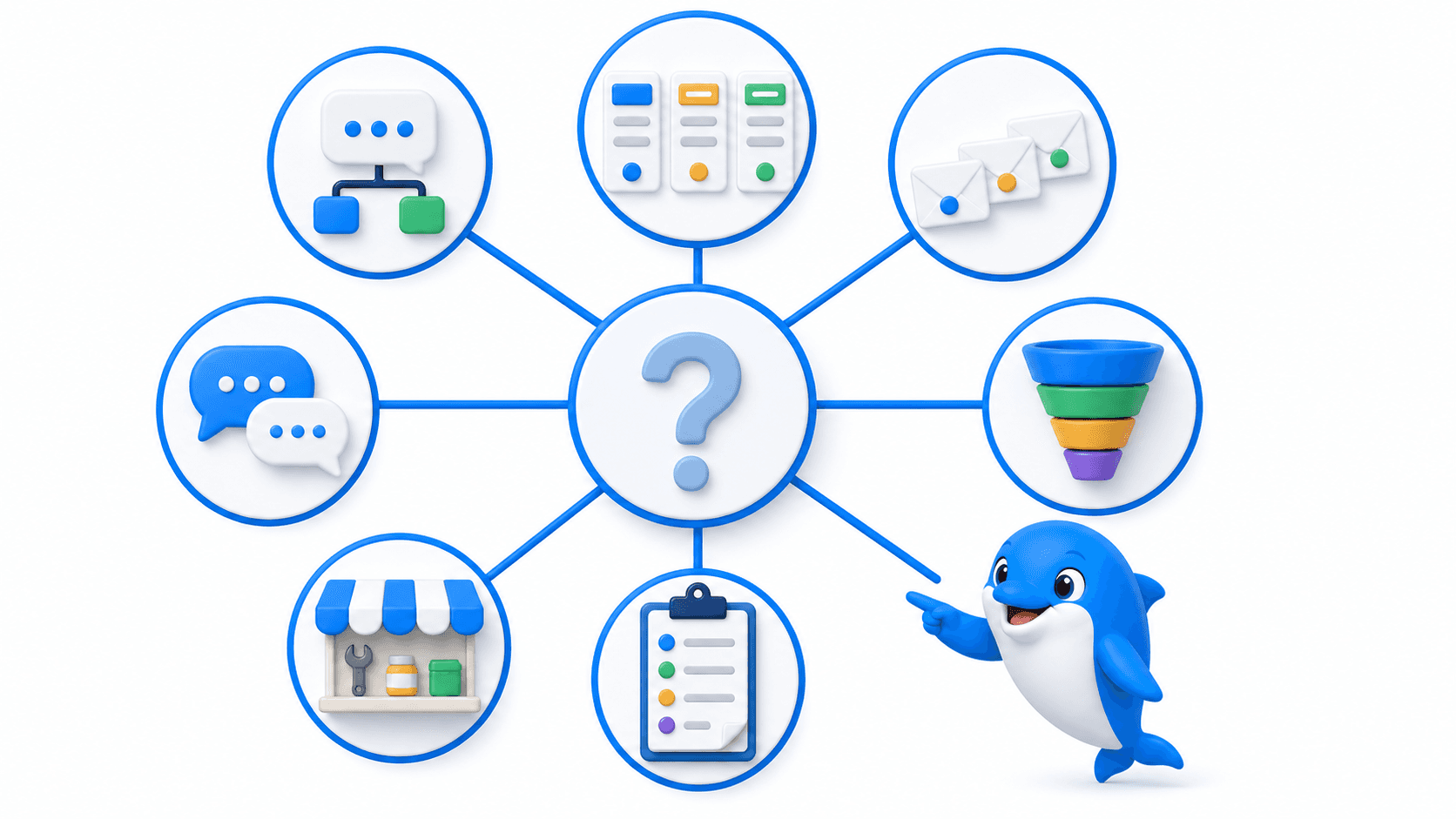
HighLevel is several systems packaged together. Before choosing an alternative, mark which layers your team actively uses and which ones merely appear in the account.
HighLevel layer | Questions to ask | Likely specialist direction |
|---|---|---|
Lead capture | Do you build websites, funnels, forms and landing pages inside the platform? | ClickFunnels or another funnel/site platform |
CRM and pipeline | Is HighLevel the system of record for contacts, opportunities and sales activity? | HubSpot, Keap or another CRM |
Lifecycle marketing | Do email campaigns, segmentation and nurture drive most revenue? | ActiveCampaign |
Conversations and AI | Are chatbots, AI qualification, messaging channels and human handoff the service you sell? | UChat or a channel-focused platform |
Local-business services | Do you resell listings, reputation, websites, ads or managed fulfillment? | Vendasta |
Social messaging | Does the work mainly begin and end in comments and DMs? | ManyChat |
Agency commercialization | Do clients need sub-accounts, a branded portal, plans, billing and API-based provisioning? | UChat, Vendasta or HighLevel, depending on the product being resold |
This exercise often reveals that the real decision is not “Which platform has everything?” It is whether to keep one broad suite or combine two focused systems with clear ownership.
Why Agencies Look For A GoHighLevel Alternative
GoHighLevel covers a lot of ground: CRM, pipelines, websites, funnels, calendars, payments, reputation, unified conversations, social media management, workflow automation and AI products. At the time of review, HighLevel listed Starter at $97 per month, Unlimited at $297 and Agency Pro at $497. Agency Pro adds SaaS Mode, automated sub-account creation, markup on supported rebilling and advanced API access. Usage-based and optional services can add to the subscription cost.
HighLevel's current SaaS Configurator makes that reseller model concrete. Agencies can package features and snapshots into plans, set monthly or annual prices, add trials, credits, add-ons and usage billing, generate payment links, and automate sub-account creation after checkout. HighLevel now documents both a Stripe-led V1 architecture and a V2 architecture that supports a broader set of payment providers; the two can run side by side.
That breadth is useful, but it also creates the central buying question: do you need an agency operating suite, or a more specialized delivery platform?
Agencies commonly explore alternatives when one of these statements sounds familiar:
"Our offer is AI chatbot implementation, not a complete marketing CRM."
"We want a stronger white-label conversation product for clients."
"Email automation is the core of our delivery."
"We need a CRM our sales and service teams can adopt across the company."
"We mainly sell funnels, courses or digital offers."
"We want a catalog of local-business services and fulfillment."
"We need straightforward Instagram and TikTok automations."
The honest answer may also be to keep HighLevel. If its CRM, funnels, calendars, reputation, payments and SaaS operations match your agency model, changing platforms can create more fragmentation than value.
1. UChat: For White-Label AI Chatbot And Omnichannel Delivery
UChat is built for the use case where the product your agency sells is conversation automation itself.
The Partner Plan is $199 per month plus client license costs starting at $10 per client workspace per month. Partners can use a custom domain and branded experience, configure client plans and selling prices, automate Stripe billing, and use the Partner API for workspace lifecycle operations.
On the delivery side, UChat combines AI Agents, business knowledge, AI Functions, role-based handoff, a visual Flow Builder, live chat transfer, CRM boards, tickets and integrations. Its channel coverage lets an agency design a reusable service around WhatsApp, Instagram, Messenger, web chat, voice and other customer entry points instead of building around one inbox.
A practical client workflow could look like this:
An Instagram comment or WhatsApp message starts the conversation.
An AI Agent answers, qualifies the lead and collects structured data.
Flow Builder applies conditions and triggers an API or integration action.
The conversation moves to a human agent when the case needs judgment.
A CRM board or ticket tracks the commercial or support outcome.
Choose UChat when your agency needs to package that workflow under its own brand and repeat it across multiple client workspaces.
Do not choose it because you expect a complete replacement for HighLevel's websites, funnels, reputation management and broad sales CRM. UChat does not provide native equivalents for that full suite, advanced Flow Builder projects have a learning curve, and the partner cost grows as paid client workspaces and resource use increase. For agencies serving many low-value clients, those workspace economics need to be modeled before choosing the platform.
Before committing, build one representative client workspace. Test the branded login, a reusable flow, an AI answer grounded in business knowledge, an API or integration action, human takeover and the client billing path. That proof is more useful than comparing screenshots of two dashboards.
For a deeper look at that delivery model, read the white-label chatbot platform guide.
2. Vendasta: For A Broad Local-Business Product Catalog
Vendasta is a strong alternative for agencies that want to resell more than their own implementation work. Its partner program combines white-label software, CRM, marketing automation, billing, project management, marketplace inventory and managed fulfillment. Vendasta also describes mid-market agencies serving local SMBs with recurring services as a primary fit.
Choose Vendasta when your growth model depends on packaging listings, reputation, social, local SEO, websites, advertising and other services through one client-facing catalog.
This is different from UChat's center of gravity. UChat gives a chatbot agency deeper control over AI conversations, flows, channels and handoff. Vendasta gives a broader local-business commerce and fulfillment layer. The decision is therefore less "which has more features?" and more "are you selling a focused automation product or a broad digital-services shelf?"
Before choosing Vendasta, model the wholesale products and fulfillment services you will actually resell. A large catalog creates opportunity only when the agency has a clear package, sales motion and margin for each client segment.
3. HubSpot: For CRM-Centered Revenue Operations
HubSpot connects Smart CRM with marketing, sales, service, content, data and revenue products. Its current Customer Platform includes a free tier and paid Starter, Professional and Enterprise routes, with Professional listed from $1,300 per month and Enterprise from $4,700 per month at the time of review.
Choose HubSpot when customer data, pipeline governance, sales adoption, service operations and cross-department reporting matter more than running a reseller-branded chatbot platform.
HubSpot is also the clearest concession in this shortlist: for a business that wants a mature CRM ecosystem rather than an agency white-label product, it can be the more coherent choice. UChat can connect conversational journeys to business systems, but its main job is not to replace every marketing, sales, content and service hub.
Pricing should be modeled against the actual hubs, seats, contacts and credits you need. A low entry offer and a full Professional deployment are very different buying decisions.
HubSpot is therefore a better HighLevel alternative for an internal revenue team than for an agency whose main goal is to give clients a fully rebranded chatbot platform. The buying unit is the company and its customer platform, not a specialist automation product the agency resells under its own name.
4. ActiveCampaign: For Email And Lifecycle Automation
ActiveCampaign focuses on email marketing, marketing automation, segmentation, CRM and ecommerce integrations. Its current plan structure also includes WhatsApp routes, either separately or combined with eligible email plans. The company states pricing starts at $15 for accounts with fewer than 1,000 contacts.
Choose ActiveCampaign when the core journey is subscriber capture, segmentation, nurture, campaign orchestration and conversion across email-led lifecycle stages.
It is not a direct white-label chatbot platform in the UChat sense, and it is not a complete HighLevel agency-suite substitute. It belongs on this list because many teams use only part of HighLevel's broad stack and may be better served by a more focused marketing automation product.
An agency can also combine systems: UChat can own the live conversational layer while ActiveCampaign handles longer-term email nurture. That architecture is often more realistic than forcing one product to do everything.
Verify how contacts move between the live conversation and the email lifecycle. Define the source of truth for consent, identity, segmentation and unsubscribe status before building automations in both tools.
5. ClickFunnels: For Funnel-First Offers
ClickFunnels organizes its product around websites or workspaces, funnels, courses, contacts and email capacity. Its official 2026 pricing article lists Launch at $97 per month, Scale at $197 and Optimize at $297.
Choose ClickFunnels when the primary job is turning an offer into landing pages, checkout steps, upsells, courses and follow-up journeys.
This makes it a useful alternative for coaches, course businesses and direct-response operators who use HighLevel mainly for funnel creation. It is a weaker substitute when your agency's differentiator is multi-channel AI conversation logic, human support handoff or a fully branded chatbot portal.
The cleanest stack may again be complementary: ClickFunnels for the page and offer journey, with UChat handling the conversation before or after the form.
The main evaluation question is what happens after conversion. If a pipeline, service desk, local-business reputation system or client SaaS portal is required, ClickFunnels will usually be one layer of the stack rather than the entire replacement.
6. Keap: For Small-Business CRM With Guided Implementation
Keap combines contact management, marketing and sales automation, pipelines, appointments, quotes, invoices, checkout, payments, API access and webhooks. Its current pricing page lists the platform from $299 per month, starts with two user licenses, scales with contacts, and requires implementation services.
Choose Keap when a small business wants CRM and automation but also values structured onboarding, migration help and ongoing success support.
That guided model is a real point of differentiation. It may suit a business that does not want to assemble its own automation architecture. The tradeoff is that implementation, contact growth and extra users need to be included in the operating budget.
For an agency reselling branded chatbot workspaces, UChat is the closer fit. For a single small business wanting CRM, payments and proven automation templates, Keap can be the more direct route.
Keap's required implementation is not simply an extra line item. It is part of the product's operating model. Buyers who want guided setup may value it; teams that already have an automation practice should compare that cost and delivery approach with a more self-directed platform.
7. ManyChat: For Focused Social DM Automation
ManyChat offers a free tier for basic automation, while its current paid plans cover Instagram, TikTok, Messenger and Telegram at lower tiers, with WhatsApp, SMS and email included in broader paid routes. Its pricing page lists Essential from $14 per month, Pro from $29, Business from $69 and Advanced from $139, with active-contact economics and regional variation.
Choose ManyChat when your work starts and mostly ends with social comments, DMs, creator campaigns and a relatively quick launch.
In fairness to ManyChat: ease of starting a familiar social automation can be more valuable than additional architecture a team will never use.
Choose UChat when that same social trigger must continue into AI qualification, API actions, reusable subflows, multiple channel types, live support, CRM/tickets or a partner-branded client platform. This is a depth-after-the-trigger decision, not a claim that one product has social automation and the other does not.
ManyChat supports agency work, but the operating model matters. Managing client automation accounts and removing message-level branding is different from giving clients an agency-owned, custom-domain platform with agency-defined plans, billing and provisioning. If full platform white label is a requirement, verify that boundary explicitly during the trial.
For a wider shortlist built specifically around agency delivery, see the ManyChat alternatives guide.
Decision Tree: Which Alternative Should You Choose?
Use this sequence instead of comparing every feature row:
Are you building a branded AI chatbot service for clients? Start with UChat.
Are you reselling a broad catalog of local-business software and fulfillment? Evaluate Vendasta.
Does CRM need to anchor marketing, sales and service across departments? Evaluate HubSpot.
Is email nurture and segmentation the main engine? Evaluate ActiveCampaign.
Are funnels, checkout and digital offers the product? Evaluate ClickFunnels.
Does a small business want CRM automation plus guided implementation? Evaluate Keap.
Is the use case mainly social comments and DMs? Evaluate ManyChat.
Do you need HighLevel's particular combination of CRM, funnels, calendars, reputation and SaaS Mode? Keeping HighLevel may be the sensible answer.
Key takeaway: A credible alternative replaces the part of HighLevel your business actually uses, not every item on its pricing page.
UChat Versus HighLevel: The Important Boundary
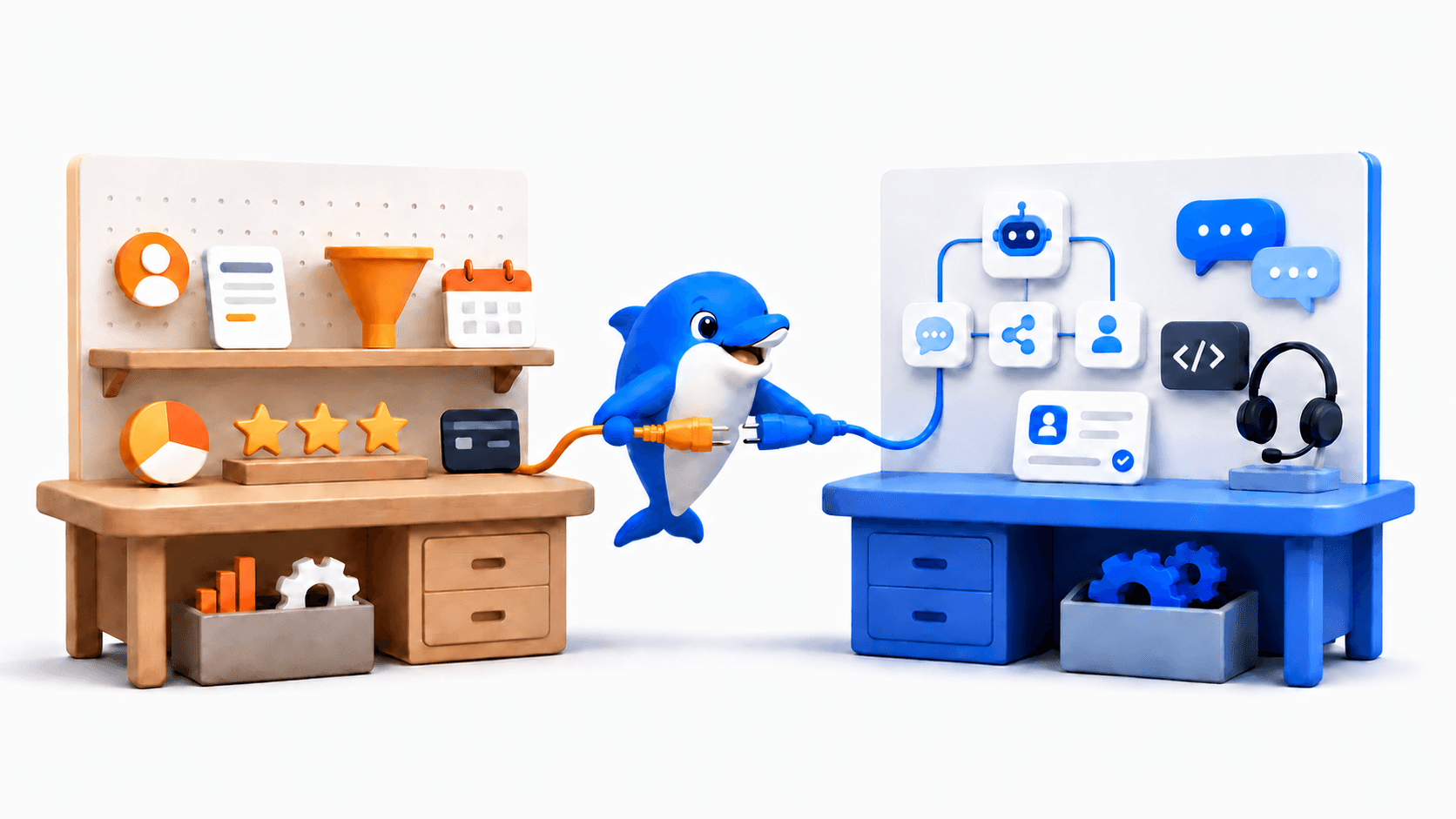
HighLevel and UChat overlap in agency delivery, AI, workflows, conversations, APIs and reseller operations. They differ most clearly in product center.
HighLevel is an agency suite. It can consolidate CRM, sites, funnels, calendars, payments, reputation, marketing and SaaS operations. UChat is a specialist conversational automation platform. It concentrates on AI Agents, visual chatbot workflows, messaging channels, human handoff, integrations and white-label client chatbot delivery.
That means an agency may choose one of three architectures:
HighLevel as the broad operating system.
UChat as the branded chatbot and omnichannel automation product.
HighLevel plus UChat, with each platform owning the work it is designed to do.
For a detailed head-to-head, read UChat vs HighLevel.
How To Compare The Real Cost
Starting price is not enough because each platform bills around different units.
HighLevel combines a $97, $297 or $497 base agency subscription with optional sub-account services and usage funded through its agency wallet. That wallet covers services such as phone, email, AI and premium workflow execution. UChat Partner combines a $199 monthly partner subscription with client licenses starting at $10 and resource add-ons. HubSpot can scale by tier, seats, contacts and credits. ActiveCampaign and ManyChat use contact-related economics. Keap adds contacts, users and required implementation. These figures were verified on official vendor pages on 5 September 2026 and should be checked again immediately before publication.
Build a 12-month model with:
base subscription;
number of client accounts or workspaces;
contacts or bot users;
messaging, phone, email and AI usage;
seats and support staff;
implementation and migration;
white-label or branded-app costs;
payment processing;
the price your agency can credibly charge clients.
The useful number is gross margin after delivery and usage costs, not the smallest number printed on a pricing page.
Should You Replace HighLevel Or Add A Specialist Layer?
There are three sensible architectures:
One Broad Suite
Keep HighLevel when consolidating CRM, funnels, calendars, payments, reputation and agency operations creates more value than specialist depth. This reduces integrations and gives the team one operating environment.
One Specialist Platform
Replace HighLevel with a focused product when the business uses only one major layer. A funnel business may choose ClickFunnels; an email-led company may choose ActiveCampaign; a chatbot agency may choose UChat.
A Connected Stack
Keep a CRM or funnel system and add a specialist conversation platform. In this model, each system needs a clear owner:
one source of truth for contacts and consent;
one system that owns pipeline stage and revenue reporting;
defined triggers for creating or updating records;
a handoff path when automation cannot complete the job;
monitoring for failed API calls, duplicates and stale data.
A connected stack can deliver more depth, but it also creates integration and support responsibility. Price that operating work into the decision.
A Practical Migration Test
Do not migrate every client and workflow at once. Use one representative path to test the replacement boundary.
Inventory the HighLevel modules, contacts, pipelines, domains, calendars, numbers, automations and integrations currently in use.
Classify each item as required, replaceable, redundant or retained in HighLevel.
Choose one client or business process with typical complexity.
Rebuild one complete journey, from trigger to data capture, follow-up, human exception and reporting.
Verify consent, channel permissions, field mapping, duplicate handling and failure alerts.
Compare the 12-month cost and staff time with the current HighLevel setup.
Run the old and new path in parallel long enough to verify leads, conversations, appointments and revenue attribution.
Create a rollback plan before moving the next client or workflow.
Do not assume a one-click migration between these products. Export and import options vary, and visual automations normally need to be rebuilt and retested in the destination platform.
Frequently Asked Questions
What is the closest GoHighLevel alternative for a chatbot agency?
UChat is the closest fit when the agency sells white-label AI chatbot and omnichannel automation. It is not a complete substitute for HighLevel's CRM, funnel, website and reputation suite.
Is there a free GoHighLevel alternative?
HubSpot offers a free CRM tier, ManyChat offers a free automation tier and UChat offers a free direct plan plus a 14-day trial with Pro features. Free plans have different limits and are not equivalent to HighLevel's agency plans.
What are the main disadvantages of GoHighLevel?
The same breadth that makes HighLevel attractive can add setup, training and operational complexity when a team needs only one part of the suite. Costs can also extend beyond the base subscription through usage-funded services and optional products. These are tradeoffs, not universal defects; an agency using the full stack may gain more from consolidation than it spends managing it.
Is HubSpot better than GoHighLevel?
HubSpot can be the better fit when an internal marketing, sales and service organization wants CRM-centered governance, reporting and a large customer-platform ecosystem. HighLevel can be the better fit when an agency wants sub-accounts, SaaS Mode and a broad toolset for serving multiple local-business clients. The decision depends on the operating model, not a universal product ranking.
Which option is better for white-label resale?
UChat, Vendasta and HighLevel all support forms of agency resale, but the products being resold differ. UChat centers on chatbot automation, Vendasta on a local-business software and services catalog, and HighLevel on its broader agency suite and SaaS Mode.
Which option is better for Instagram automation?
ManyChat can be a simpler starting point for social-first comments and DMs. UChat becomes more relevant when Instagram is one entry point into a deeper workflow involving AI, APIs, additional channels, human handoff or partner delivery.
Can UChat and GoHighLevel work together?
They can serve different layers of the same agency stack: HighLevel for CRM and broad agency operations, and UChat for advanced conversational automation and branded chatbot delivery. The exact integration design should be tested against the data, API and channel requirements of the client workflow.
Try UChat For Your Agency
If your alternative search is about building a branded AI chatbot offer, explore the UChat Partner Plan. You can configure your brand, client plans, workflows and billing model while UChat provides the underlying conversational automation platform.
You can also start a 14-day UChat trial with Pro features and no credit card, or book a partner demo to discuss your delivery model.
Sources
Research reviewed: 5 September 2026. Pricing, packaging and product availability can change.
Editorial disclosure: This guide is published by UChat. We recommend UChat only for the use cases where the cited product scope supports that recommendation, and we name stronger options for other requirements.
UChat is the first alternative to consider when your agency wants to sell white-label AI chatbot and omnichannel automation under its own brand. It gives partners a custom-domain platform, configurable client plans, AI Agents, visual conversation flows, broad messaging-channel coverage, human handoff, billing automation and Partner API access.
But UChat is not a one-for-one replacement for every part of GoHighLevel. Choose Vendasta for a broad local-business product marketplace and managed fulfillment, HubSpot for a CRM-centered customer platform, ActiveCampaign for email lifecycle automation, ClickFunnels for funnels, Keap for guided small-business CRM, or ManyChat for focused social DM automation.
Bottom line: Start with the business you want to run, not the feature checklist you want to replace.
GoHighLevel Alternatives At A Glance
Alternative | Right for whom | What it replaces most directly | Important tradeoff |
|---|---|---|---|
UChat | Agencies selling branded AI chatbot and omnichannel automation | Conversation workflows, AI agents, client chatbot workspaces and reseller operations | It is not a full replacement for HighLevel's website, funnel, reputation and broad CRM suite |
Vendasta | Agencies selling a catalog of local-business software and managed services | White-label marketplace, local marketing products, fulfillment and client reporting | Broader service inventory can mean a larger operating model than a specialist chatbot offer |
HubSpot | Teams that want CRM to anchor marketing, sales, service, content and data | CRM-centered revenue operations and connected departmental tools | Advanced tiers can represent a materially larger investment |
ActiveCampaign | Businesses centered on email, segmentation and lifecycle automation | Marketing automation and nurture | It is not primarily an agency white-label chatbot platform |
ClickFunnels | Offer creators and teams centered on landing pages and sales funnels | Funnel building, courses and conversion journeys | Conversation automation is not the center of the product |
Keap | Small businesses wanting CRM, payments and automation with implementation support | Contact management, pipeline, appointments, invoicing and follow-up | Required implementation and contact/user economics need to be budgeted |
ManyChat | Creators and social teams starting with comments and DMs | Instagram, TikTok, Messenger and WhatsApp engagement automation | Teams needing deeper cross-channel business workflows may outgrow the narrower center |
How We Selected These Alternatives
This is not a list of products that happen to mention CRM or automation. We reviewed each option against the part of HighLevel it can credibly replace and the operating model it supports.
The shortlist uses four filters:
A distinct job to be done. Each product must be a coherent choice for a specific buyer, such as a chatbot agency, a local-business reseller, a CRM-led team or a funnel-first business.
Current first-party evidence. Product scope, pricing and packaging claims come from official vendor pages or documentation reviewed on 5 September 2026.
A meaningful replacement boundary. We state what the product replaces well and what would still need another system.
A usable cost model. The comparison considers clients, contacts, seats, usage and implementation—not just the smallest monthly price.
We did not assign an artificial overall score. A higher feature count does not make a product the better choice when those features sit outside the buyer's business model.
What Are You Actually Replacing In GoHighLevel?
HighLevel is several systems packaged together. Before choosing an alternative, mark which layers your team actively uses and which ones merely appear in the account.
HighLevel layer | Questions to ask | Likely specialist direction |
|---|---|---|
Lead capture | Do you build websites, funnels, forms and landing pages inside the platform? | ClickFunnels or another funnel/site platform |
CRM and pipeline | Is HighLevel the system of record for contacts, opportunities and sales activity? | HubSpot, Keap or another CRM |
Lifecycle marketing | Do email campaigns, segmentation and nurture drive most revenue? | ActiveCampaign |
Conversations and AI | Are chatbots, AI qualification, messaging channels and human handoff the service you sell? | UChat or a channel-focused platform |
Local-business services | Do you resell listings, reputation, websites, ads or managed fulfillment? | Vendasta |
Social messaging | Does the work mainly begin and end in comments and DMs? | ManyChat |
Agency commercialization | Do clients need sub-accounts, a branded portal, plans, billing and API-based provisioning? | UChat, Vendasta or HighLevel, depending on the product being resold |
This exercise often reveals that the real decision is not “Which platform has everything?” It is whether to keep one broad suite or combine two focused systems with clear ownership.
Why Agencies Look For A GoHighLevel Alternative
GoHighLevel covers a lot of ground: CRM, pipelines, websites, funnels, calendars, payments, reputation, unified conversations, social media management, workflow automation and AI products. At the time of review, HighLevel listed Starter at $97 per month, Unlimited at $297 and Agency Pro at $497. Agency Pro adds SaaS Mode, automated sub-account creation, markup on supported rebilling and advanced API access. Usage-based and optional services can add to the subscription cost.
HighLevel's current SaaS Configurator makes that reseller model concrete. Agencies can package features and snapshots into plans, set monthly or annual prices, add trials, credits, add-ons and usage billing, generate payment links, and automate sub-account creation after checkout. HighLevel now documents both a Stripe-led V1 architecture and a V2 architecture that supports a broader set of payment providers; the two can run side by side.
That breadth is useful, but it also creates the central buying question: do you need an agency operating suite, or a more specialized delivery platform?
Agencies commonly explore alternatives when one of these statements sounds familiar:
"Our offer is AI chatbot implementation, not a complete marketing CRM."
"We want a stronger white-label conversation product for clients."
"Email automation is the core of our delivery."
"We need a CRM our sales and service teams can adopt across the company."
"We mainly sell funnels, courses or digital offers."
"We want a catalog of local-business services and fulfillment."
"We need straightforward Instagram and TikTok automations."
The honest answer may also be to keep HighLevel. If its CRM, funnels, calendars, reputation, payments and SaaS operations match your agency model, changing platforms can create more fragmentation than value.
1. UChat: For White-Label AI Chatbot And Omnichannel Delivery
UChat is built for the use case where the product your agency sells is conversation automation itself.
The Partner Plan is $199 per month plus client license costs starting at $10 per client workspace per month. Partners can use a custom domain and branded experience, configure client plans and selling prices, automate Stripe billing, and use the Partner API for workspace lifecycle operations.
On the delivery side, UChat combines AI Agents, business knowledge, AI Functions, role-based handoff, a visual Flow Builder, live chat transfer, CRM boards, tickets and integrations. Its channel coverage lets an agency design a reusable service around WhatsApp, Instagram, Messenger, web chat, voice and other customer entry points instead of building around one inbox.
A practical client workflow could look like this:
An Instagram comment or WhatsApp message starts the conversation.
An AI Agent answers, qualifies the lead and collects structured data.
Flow Builder applies conditions and triggers an API or integration action.
The conversation moves to a human agent when the case needs judgment.
A CRM board or ticket tracks the commercial or support outcome.
Choose UChat when your agency needs to package that workflow under its own brand and repeat it across multiple client workspaces.
Do not choose it because you expect a complete replacement for HighLevel's websites, funnels, reputation management and broad sales CRM. UChat does not provide native equivalents for that full suite, advanced Flow Builder projects have a learning curve, and the partner cost grows as paid client workspaces and resource use increase. For agencies serving many low-value clients, those workspace economics need to be modeled before choosing the platform.
Before committing, build one representative client workspace. Test the branded login, a reusable flow, an AI answer grounded in business knowledge, an API or integration action, human takeover and the client billing path. That proof is more useful than comparing screenshots of two dashboards.
For a deeper look at that delivery model, read the white-label chatbot platform guide.
2. Vendasta: For A Broad Local-Business Product Catalog
Vendasta is a strong alternative for agencies that want to resell more than their own implementation work. Its partner program combines white-label software, CRM, marketing automation, billing, project management, marketplace inventory and managed fulfillment. Vendasta also describes mid-market agencies serving local SMBs with recurring services as a primary fit.
Choose Vendasta when your growth model depends on packaging listings, reputation, social, local SEO, websites, advertising and other services through one client-facing catalog.
This is different from UChat's center of gravity. UChat gives a chatbot agency deeper control over AI conversations, flows, channels and handoff. Vendasta gives a broader local-business commerce and fulfillment layer. The decision is therefore less "which has more features?" and more "are you selling a focused automation product or a broad digital-services shelf?"
Before choosing Vendasta, model the wholesale products and fulfillment services you will actually resell. A large catalog creates opportunity only when the agency has a clear package, sales motion and margin for each client segment.
3. HubSpot: For CRM-Centered Revenue Operations
HubSpot connects Smart CRM with marketing, sales, service, content, data and revenue products. Its current Customer Platform includes a free tier and paid Starter, Professional and Enterprise routes, with Professional listed from $1,300 per month and Enterprise from $4,700 per month at the time of review.
Choose HubSpot when customer data, pipeline governance, sales adoption, service operations and cross-department reporting matter more than running a reseller-branded chatbot platform.
HubSpot is also the clearest concession in this shortlist: for a business that wants a mature CRM ecosystem rather than an agency white-label product, it can be the more coherent choice. UChat can connect conversational journeys to business systems, but its main job is not to replace every marketing, sales, content and service hub.
Pricing should be modeled against the actual hubs, seats, contacts and credits you need. A low entry offer and a full Professional deployment are very different buying decisions.
HubSpot is therefore a better HighLevel alternative for an internal revenue team than for an agency whose main goal is to give clients a fully rebranded chatbot platform. The buying unit is the company and its customer platform, not a specialist automation product the agency resells under its own name.
4. ActiveCampaign: For Email And Lifecycle Automation
ActiveCampaign focuses on email marketing, marketing automation, segmentation, CRM and ecommerce integrations. Its current plan structure also includes WhatsApp routes, either separately or combined with eligible email plans. The company states pricing starts at $15 for accounts with fewer than 1,000 contacts.
Choose ActiveCampaign when the core journey is subscriber capture, segmentation, nurture, campaign orchestration and conversion across email-led lifecycle stages.
It is not a direct white-label chatbot platform in the UChat sense, and it is not a complete HighLevel agency-suite substitute. It belongs on this list because many teams use only part of HighLevel's broad stack and may be better served by a more focused marketing automation product.
An agency can also combine systems: UChat can own the live conversational layer while ActiveCampaign handles longer-term email nurture. That architecture is often more realistic than forcing one product to do everything.
Verify how contacts move between the live conversation and the email lifecycle. Define the source of truth for consent, identity, segmentation and unsubscribe status before building automations in both tools.
5. ClickFunnels: For Funnel-First Offers
ClickFunnels organizes its product around websites or workspaces, funnels, courses, contacts and email capacity. Its official 2026 pricing article lists Launch at $97 per month, Scale at $197 and Optimize at $297.
Choose ClickFunnels when the primary job is turning an offer into landing pages, checkout steps, upsells, courses and follow-up journeys.
This makes it a useful alternative for coaches, course businesses and direct-response operators who use HighLevel mainly for funnel creation. It is a weaker substitute when your agency's differentiator is multi-channel AI conversation logic, human support handoff or a fully branded chatbot portal.
The cleanest stack may again be complementary: ClickFunnels for the page and offer journey, with UChat handling the conversation before or after the form.
The main evaluation question is what happens after conversion. If a pipeline, service desk, local-business reputation system or client SaaS portal is required, ClickFunnels will usually be one layer of the stack rather than the entire replacement.
6. Keap: For Small-Business CRM With Guided Implementation
Keap combines contact management, marketing and sales automation, pipelines, appointments, quotes, invoices, checkout, payments, API access and webhooks. Its current pricing page lists the platform from $299 per month, starts with two user licenses, scales with contacts, and requires implementation services.
Choose Keap when a small business wants CRM and automation but also values structured onboarding, migration help and ongoing success support.
That guided model is a real point of differentiation. It may suit a business that does not want to assemble its own automation architecture. The tradeoff is that implementation, contact growth and extra users need to be included in the operating budget.
For an agency reselling branded chatbot workspaces, UChat is the closer fit. For a single small business wanting CRM, payments and proven automation templates, Keap can be the more direct route.
Keap's required implementation is not simply an extra line item. It is part of the product's operating model. Buyers who want guided setup may value it; teams that already have an automation practice should compare that cost and delivery approach with a more self-directed platform.
7. ManyChat: For Focused Social DM Automation
ManyChat offers a free tier for basic automation, while its current paid plans cover Instagram, TikTok, Messenger and Telegram at lower tiers, with WhatsApp, SMS and email included in broader paid routes. Its pricing page lists Essential from $14 per month, Pro from $29, Business from $69 and Advanced from $139, with active-contact economics and regional variation.
Choose ManyChat when your work starts and mostly ends with social comments, DMs, creator campaigns and a relatively quick launch.
In fairness to ManyChat: ease of starting a familiar social automation can be more valuable than additional architecture a team will never use.
Choose UChat when that same social trigger must continue into AI qualification, API actions, reusable subflows, multiple channel types, live support, CRM/tickets or a partner-branded client platform. This is a depth-after-the-trigger decision, not a claim that one product has social automation and the other does not.
ManyChat supports agency work, but the operating model matters. Managing client automation accounts and removing message-level branding is different from giving clients an agency-owned, custom-domain platform with agency-defined plans, billing and provisioning. If full platform white label is a requirement, verify that boundary explicitly during the trial.
For a wider shortlist built specifically around agency delivery, see the ManyChat alternatives guide.
Decision Tree: Which Alternative Should You Choose?
Use this sequence instead of comparing every feature row:
Are you building a branded AI chatbot service for clients? Start with UChat.
Are you reselling a broad catalog of local-business software and fulfillment? Evaluate Vendasta.
Does CRM need to anchor marketing, sales and service across departments? Evaluate HubSpot.
Is email nurture and segmentation the main engine? Evaluate ActiveCampaign.
Are funnels, checkout and digital offers the product? Evaluate ClickFunnels.
Does a small business want CRM automation plus guided implementation? Evaluate Keap.
Is the use case mainly social comments and DMs? Evaluate ManyChat.
Do you need HighLevel's particular combination of CRM, funnels, calendars, reputation and SaaS Mode? Keeping HighLevel may be the sensible answer.
Key takeaway: A credible alternative replaces the part of HighLevel your business actually uses, not every item on its pricing page.
UChat Versus HighLevel: The Important Boundary
HighLevel and UChat overlap in agency delivery, AI, workflows, conversations, APIs and reseller operations. They differ most clearly in product center.
HighLevel is an agency suite. It can consolidate CRM, sites, funnels, calendars, payments, reputation, marketing and SaaS operations. UChat is a specialist conversational automation platform. It concentrates on AI Agents, visual chatbot workflows, messaging channels, human handoff, integrations and white-label client chatbot delivery.
That means an agency may choose one of three architectures:
HighLevel as the broad operating system.
UChat as the branded chatbot and omnichannel automation product.
HighLevel plus UChat, with each platform owning the work it is designed to do.
For a detailed head-to-head, read UChat vs HighLevel.
How To Compare The Real Cost
Starting price is not enough because each platform bills around different units.
HighLevel combines a $97, $297 or $497 base agency subscription with optional sub-account services and usage funded through its agency wallet. That wallet covers services such as phone, email, AI and premium workflow execution. UChat Partner combines a $199 monthly partner subscription with client licenses starting at $10 and resource add-ons. HubSpot can scale by tier, seats, contacts and credits. ActiveCampaign and ManyChat use contact-related economics. Keap adds contacts, users and required implementation. These figures were verified on official vendor pages on 5 September 2026 and should be checked again immediately before publication.
Build a 12-month model with:
base subscription;
number of client accounts or workspaces;
contacts or bot users;
messaging, phone, email and AI usage;
seats and support staff;
implementation and migration;
white-label or branded-app costs;
payment processing;
the price your agency can credibly charge clients.
The useful number is gross margin after delivery and usage costs, not the smallest number printed on a pricing page.
Should You Replace HighLevel Or Add A Specialist Layer?
There are three sensible architectures:
One Broad Suite
Keep HighLevel when consolidating CRM, funnels, calendars, payments, reputation and agency operations creates more value than specialist depth. This reduces integrations and gives the team one operating environment.
One Specialist Platform
Replace HighLevel with a focused product when the business uses only one major layer. A funnel business may choose ClickFunnels; an email-led company may choose ActiveCampaign; a chatbot agency may choose UChat.
A Connected Stack
Keep a CRM or funnel system and add a specialist conversation platform. In this model, each system needs a clear owner:
one source of truth for contacts and consent;
one system that owns pipeline stage and revenue reporting;
defined triggers for creating or updating records;
a handoff path when automation cannot complete the job;
monitoring for failed API calls, duplicates and stale data.
A connected stack can deliver more depth, but it also creates integration and support responsibility. Price that operating work into the decision.
A Practical Migration Test
Do not migrate every client and workflow at once. Use one representative path to test the replacement boundary.
Inventory the HighLevel modules, contacts, pipelines, domains, calendars, numbers, automations and integrations currently in use.
Classify each item as required, replaceable, redundant or retained in HighLevel.
Choose one client or business process with typical complexity.
Rebuild one complete journey, from trigger to data capture, follow-up, human exception and reporting.
Verify consent, channel permissions, field mapping, duplicate handling and failure alerts.
Compare the 12-month cost and staff time with the current HighLevel setup.
Run the old and new path in parallel long enough to verify leads, conversations, appointments and revenue attribution.
Create a rollback plan before moving the next client or workflow.
Do not assume a one-click migration between these products. Export and import options vary, and visual automations normally need to be rebuilt and retested in the destination platform.
Frequently Asked Questions
What is the closest GoHighLevel alternative for a chatbot agency?
UChat is the closest fit when the agency sells white-label AI chatbot and omnichannel automation. It is not a complete substitute for HighLevel's CRM, funnel, website and reputation suite.
Is there a free GoHighLevel alternative?
HubSpot offers a free CRM tier, ManyChat offers a free automation tier and UChat offers a free direct plan plus a 14-day trial with Pro features. Free plans have different limits and are not equivalent to HighLevel's agency plans.
What are the main disadvantages of GoHighLevel?
The same breadth that makes HighLevel attractive can add setup, training and operational complexity when a team needs only one part of the suite. Costs can also extend beyond the base subscription through usage-funded services and optional products. These are tradeoffs, not universal defects; an agency using the full stack may gain more from consolidation than it spends managing it.
Is HubSpot better than GoHighLevel?
HubSpot can be the better fit when an internal marketing, sales and service organization wants CRM-centered governance, reporting and a large customer-platform ecosystem. HighLevel can be the better fit when an agency wants sub-accounts, SaaS Mode and a broad toolset for serving multiple local-business clients. The decision depends on the operating model, not a universal product ranking.
Which option is better for white-label resale?
UChat, Vendasta and HighLevel all support forms of agency resale, but the products being resold differ. UChat centers on chatbot automation, Vendasta on a local-business software and services catalog, and HighLevel on its broader agency suite and SaaS Mode.
Which option is better for Instagram automation?
ManyChat can be a simpler starting point for social-first comments and DMs. UChat becomes more relevant when Instagram is one entry point into a deeper workflow involving AI, APIs, additional channels, human handoff or partner delivery.
Can UChat and GoHighLevel work together?
They can serve different layers of the same agency stack: HighLevel for CRM and broad agency operations, and UChat for advanced conversational automation and branded chatbot delivery. The exact integration design should be tested against the data, API and channel requirements of the client workflow.
Try UChat For Your Agency
If your alternative search is about building a branded AI chatbot offer, explore the UChat Partner Plan. You can configure your brand, client plans, workflows and billing model while UChat provides the underlying conversational automation platform.
You can also start a 14-day UChat trial with Pro features and no credit card, or book a partner demo to discuss your delivery model.
Sources
Research reviewed: 5 September 2026. Pricing, packaging and product availability can change.
Editorial disclosure: This guide is published by UChat. We recommend UChat only for the use cases where the cited product scope supports that recommendation, and we name stronger options for other requirements.