12 minutes
UChat
Posted by
UChat vs Chatbase: Which AI Customer Experience Platform Fits Your Workflow?
12 minutes
Posted by
UChat

Quick Verdict
UChat and Chatbase can both build knowledge-grounded AI Agents, call external actions, collect leads, connect customer channels and hand conversations to people. The key difference is how much of the customer journey you want to design explicitly.
Choose Chatbase when you want to launch an AI-first customer experience Agent quickly. Choose UChat when AI must operate inside a larger visual journey spanning channel triggers, deterministic flows, CRM, ecommerce, payments, support and branded client workspaces.
Chatbase is a credible CX platform, not just a document chatbot. It now combines AI Agents, Actions, Helpdesk, live chat, voice, outbound campaigns, analytics and channels including WhatsApp, Instagram and Messenger.
UChat is the stronger fit for automation builders and agencies that need deeper visual control, more native channel options, reusable operational flows and a full-white-label platform business model.
Table Of Contents
Scorecard
Recommendation By Use Case
Feature Comparison: AI Agent And Workflow Architecture
Knowledge, Actions And Lead Capture
Channels And Outbound Engagement
Helpdesk, Human Handoff, CRM And Tickets
Voice, Integrations, Ecommerce And Payments
Pricing And Usage Models
Agency And White-Label Delivery
When Chatbase May Be A Better Fit
Decision Checklist
FAQ
Final Verdict And CTA
Scorecard
Decision area | Better starting fit | Why |
|---|---|---|
Fast knowledge Agent launch | Chatbase | Training sources, Agent instructions, Actions and deployment form a focused AI-first setup. |
AI-first support and sales Agent | Chatbase | The platform packages CX roles, Helpdesk, channels, campaigns and analytics around the Agent. |
Explicit visual journey design | UChat | Builders control messages, questions, conditions, actions, APIs and AI across the complete flow. |
Native channel breadth | UChat | UChat supports a broader collection of messaging and voice channels with channel-specific behavior. |
Custom API actions and interactive widgets | Chatbase | Custom Actions support server, client and embedded UI patterns. |
CRM, tickets and lifecycle automation | UChat | Customer data, Boards, Tickets, tags and follow-up remain inside one automation environment. |
Human support around the Agent | Depends | Chatbase Helpdesk is focused and direct; UChat connects Live Chat with broader CRM and workflow operations. |
Ecommerce and payment journeys | UChat | Commerce and payment actions can be designed as native stages of the wider flow. |
Full-white-label agency platform | UChat | Partner Plan includes domain, login, dashboard, client workspaces, plan control, billing and Partner API operations. |
Transparent low-cost entry | UChat | UChat Business starts at $15/month for one bot, 1,000 bot users and five members; advanced needs can still add usage costs. Chatbase's useful CX capabilities begin across higher message-credit plans. |
Recommendation By Use Case
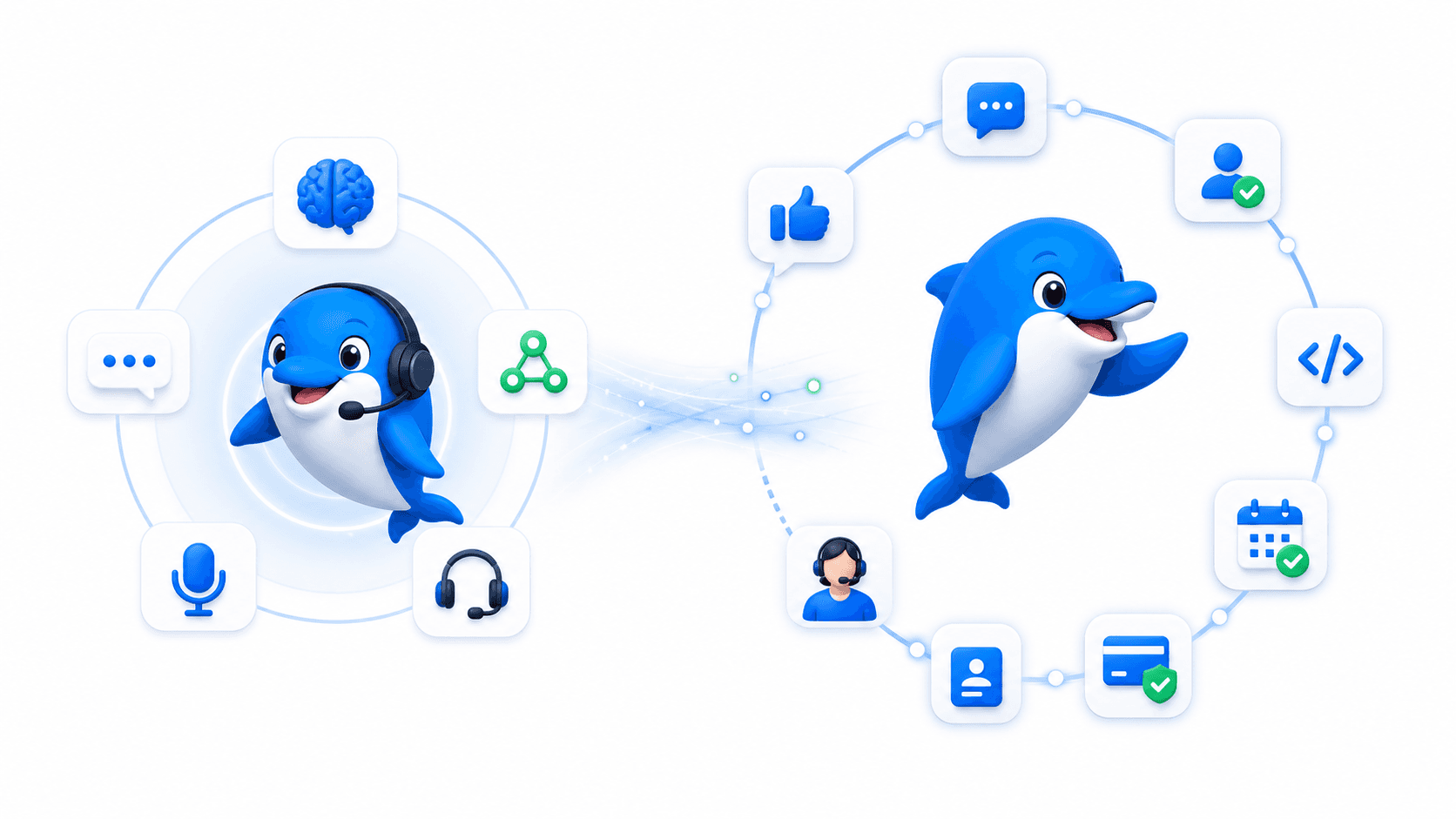
Chatbase will feel natural to a support or sales team that wants to connect company data, define an Agent role, enable Actions and deploy across a focused set of CX channels without building a large flow first.
UChat becomes more useful when the conversation must move through an intentionally designed process: social trigger, qualification, API lookup, booking, payment, CRM stage, human handoff and automated follow-up.
UChat Partner is designed for agencies that want to package the entire system under their own brand, manage separate client workspaces and control client-facing plans, prices and billing.
The short version: Chatbase packages the CX Agent. UChat architects the customer automation system around it.
Feature Comparison: AI Agent And Workflow Architecture
Chatbase begins with the AI Agent. A team connects sources, writes instructions, chooses a model, defines guardrails and enables Actions. The Agent interprets customer intent and decides when an Action should run.
This is efficient when the desired experience is mostly conversational. The Agent can answer, collect information, call an API, book, escalate or display an interactive widget without requiring every path to be drawn manually.
UChat also supports configurable AI Agents with business knowledge and functions. Its visual Flow Builder places those Agents inside a broader deterministic architecture.
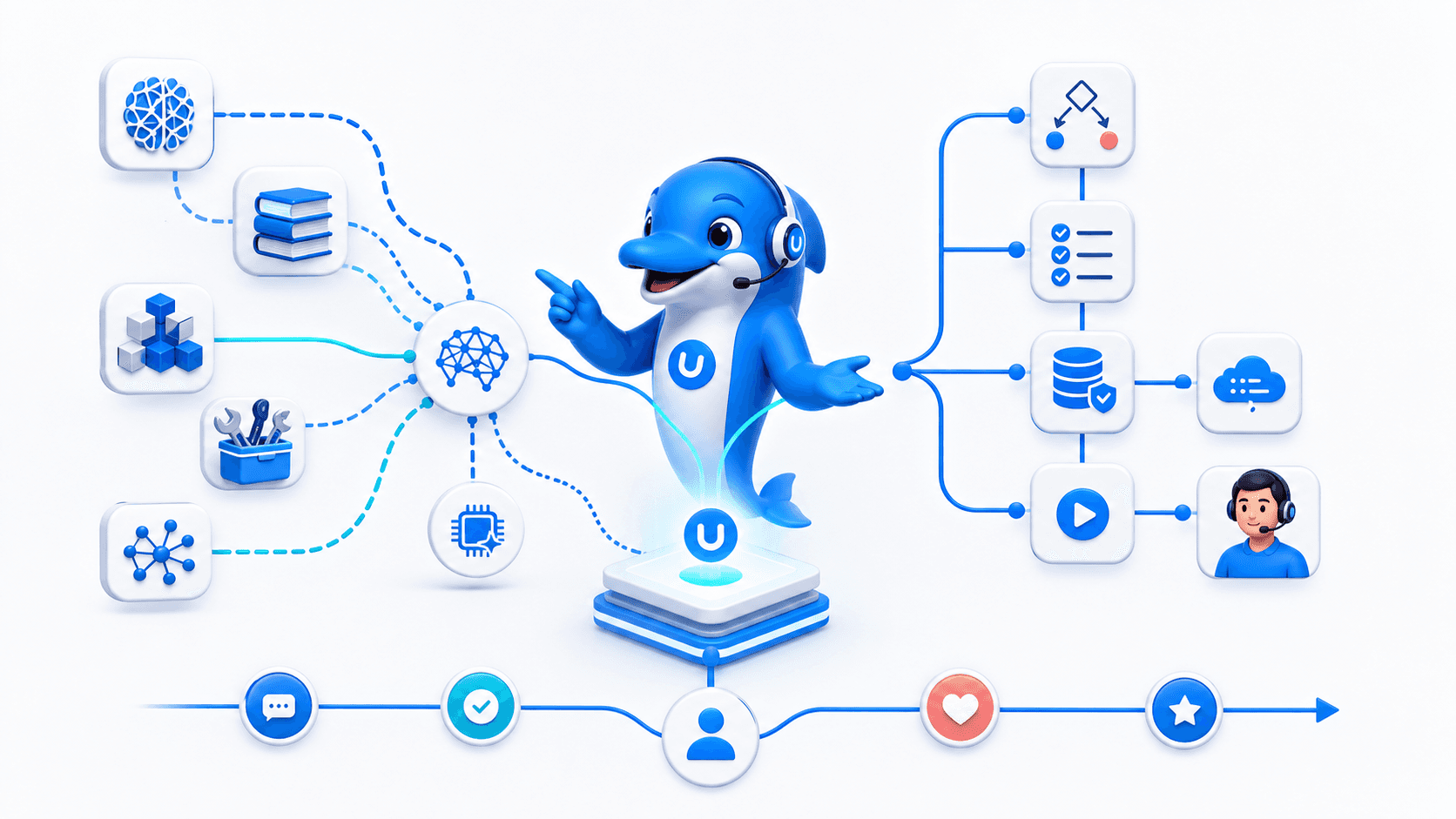
A builder can collect mandatory fields before AI runs, branch on channel or account state, invoke an Agent for interpretation, execute a function, validate the response and continue through explicit messages and actions. Multiple specialized Agents can participate while the flow enforces business rules.
The tradeoff is speed versus visible orchestration. Chatbase can get an AI-led experience live quickly. UChat asks for more solution design but gives operations teams a clearer map of what happens before, during and after the AI decision.
Knowledge, Actions And Lead Capture
Chatbase supports multiple training sources and can automatically retrain on higher plans. Its Actions include lead collection, booking tools, escalation, custom APIs, buttons and interactive widgets.
Custom Actions are particularly capable. They can call a server API, combine a response with embedded UI, execute in the browser or display a widget without an API. Builders can restrict which response data the Agent may access. Lead collection can happen through a form or natural conversation, include custom fields and send results through webhooks or email.
UChat AI Agents can also use business knowledge and call functions. Its wider automation layer can store customer data in fields, apply tags, trigger sequences, call external requests and connect downstream workflow steps.
A UChat journey might:
start from an Instagram comment, WhatsApp message or web page;
collect name, company, budget and intent;
let an AI Agent answer and qualify;
look up account or product data;
book a meeting or collect payment;
move the contact on a CRM Board;
open a Ticket or transfer to Live Chat; and
send channel-specific reminders and follow-up.
Chatbase can perform several of these tasks through Actions. UChat's advantage is the explicit lifecycle surrounding the Action.
A successful API call is not the end of the journey. Compare how each platform stores the result, changes customer state, handles failure and schedules what happens next.
Channels And Outbound Engagement
Chatbase deploys Agents through chat, WhatsApp, Instagram, Messenger, Slack, email and voice-related experiences. Its social integrations support direct customer conversations, and Instagram or Messenger conversations can be taken over by a person. WhatsApp supports lead capture, templates and outbound campaigns.
This is a meaningful channel set for support, sales and product guidance.
UChat supports those core social channels as part of a broader channel portfolio that can include Web Chat, Telegram, SMS, voice, WeChat, LINE, Viber, RCS, TikTok and others. More importantly, its builder works with channel-specific triggers, message formats, templates and events.
For teams working inside that focused channel set, Chatbase may be sufficient when the buyer's channels align with its CX suite. UChat becomes more attractive when channel variety and channel-specific automation are central to the service being sold.
Helpdesk, Human Handoff, CRM And Tickets
Chatbase Helpdesk allows an AI Agent to hand a conversation to a support person. The AI stops responding, the conversation is marked for live chat, and support agents can reply, add internal notes and continue in the same thread. Integrations can also create escalation tickets in tools such as Zendesk, Intercom or Salesforce with conversation context.
That is a coherent AI-to-human service model.
UChat Live Chat supports transfers, assignments and mobile handling. The customer record also connects to custom fields, CRM-style Boards and Tickets, so support can be one stage of a larger acquisition, sales or retention journey.
Chatbase Helpdesk centers resolution. UChat centers lifecycle continuity.
If a company already uses an enterprise helpdesk, Chatbase's ticket escalation may be a clean addition. If the business wants fewer separate systems, UChat's integrated Live Chat, Boards and Tickets can reduce handoffs between tools.
Voice, Integrations, Ecommerce And Payments
Chatbase Standard includes voice and telephony, and its integrations connect systems such as Stripe, Zendesk and Salesforce. Custom Actions can connect additional APIs and embedded widgets.
UChat supports AI and phone-call experiences alongside channel automation. Native integrations and actions can connect Shopify, WooCommerce, Stripe, PayPal, Calendly, Google Sheets, Gmail, Zapier, Make and external APIs. Mini Apps can package custom triggers and actions for reuse.
Chatbase is appealing when the Agent and its Actions are the core system. UChat is appealing when ecommerce, payments and integrations are stages in an observable visual journey that non-developers must maintain.
Pricing And Usage Models
On 2 August 2026, Chatbase displayed both monthly billing and lower annual monthly-equivalent pricing:
Chatbase plan | Monthly | Annual equivalent | Included message credits and selected capabilities |
|---|---|---|---|
Free | $0 | $0 | 50 monthly credits, one member and limited models; inactive Free Agents can be deleted. |
Hobby | $40 | $32/month | 500 credits, two members, advanced models, integrations, basic analytics and attachments. |
Standard | $150 | $120/month | 4,000 credits, three members, Helpdesk, voice, telephony, outbound campaigns, API access and advanced integrations. |
Pro | $500 | $400/month | 15,000 credits, five members, advanced analytics, source suggestions and tickets as a source. |
Enterprise | Custom | Custom | Higher limits, flexible billing, SSO, roles, audit logs, white-labeling, support and enterprise controls. |
Chatbase also lists add-ons: $40 per 1,000 auto-recharge message credits, $300 per extra AI Agent per year and $1,188 per year to remove “Powered by Chatbase” from deployed Agents. Packaging can change, so refresh these amounts before purchase.
A message credit is not necessarily one complete customer conversation. Chatbase says credits are consumed by requests to the AI model, with the amount depending on the model. An interaction that runs an Action may make multiple model requests, so teams should estimate usage from representative test conversations instead of treating the plan limit as a fixed conversation count.
UChat Business starts at $15 per month, packaged around bots, bot users and members with add-ons as usage grows. The 14-day trial includes Pro features and does not require a credit card.
UChat Partner is $199 per month and includes a partner workspace with five bots, 10,000 bot users and five members. Default client workspace costs include $10 Business, $30 Business Light and $100 Business Large per month. Partners choose client-facing prices and can request customized plan limits.
The units differ: Chatbase meters Agent message credits and packages CX capabilities by plan; UChat meters platform resources and partner workspace licenses. Estimate Agent conversations, channels, human seats, external services and client workspaces rather than comparing one number.
Agency And White-Label Delivery
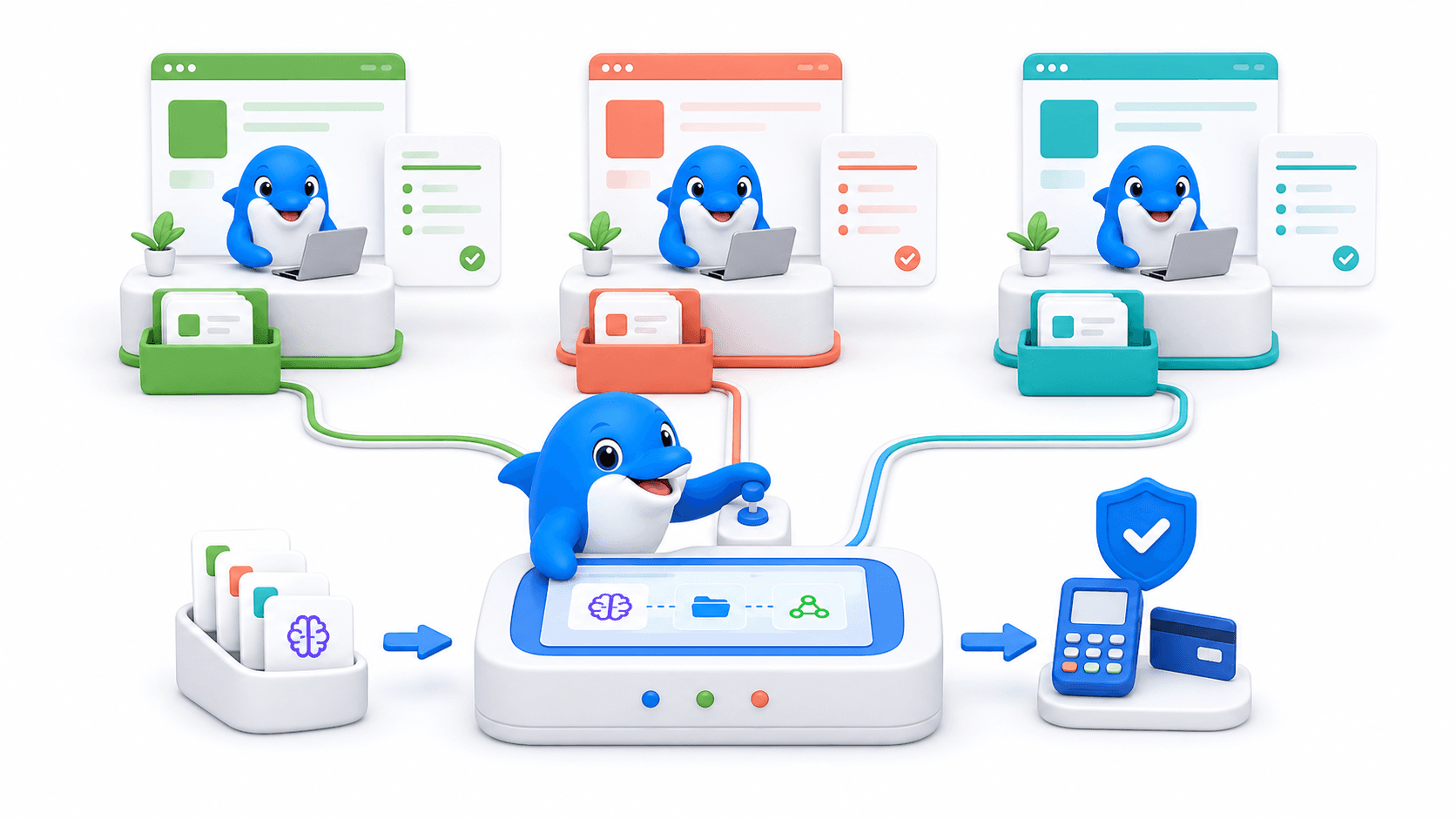
Chatbase Enterprise includes white-labeling, while lower plans can purchase an add-on to remove Chatbase branding from deployed Agents. This can support a branded customer-facing experience.
UChat Partner is built around broader platform delivery. Partners can customize the domain, login, dashboard, navigation and support paths; manage client workspaces; define plans and selling prices; connect billing; install templates; impersonate workspaces for support; and automate operations through the Partner API.
The important demo questions are:
Which customer-facing and client-admin surfaces retain vendor branding?
Does the client work inside a widget, the vendor dashboard or the agency's domain?
Can the agency define plans and prices?
Who bills the client?
Can onboarding, upgrades and template installation be automated?
Chatbase can fit agencies deploying managed AI Agents. UChat Partner is usually closer to agencies selling a branded automation platform plus ongoing service.
When Chatbase May Be A Better Fit
Chatbase may be the better option when:
the priority is launching a knowledge-grounded CX Agent quickly;
support, sales and product guidance are the main use cases;
Chatbase's channel set covers the requirement;
Helpdesk or existing enterprise ticket integrations fit the operating model;
custom Actions and embedded Agent widgets are central; or
the team prefers Agent-led configuration over a large visual flow.
In those cases, UChat's broader builder and channel surface may add complexity the team does not need.
Decision Checklist
Chatbase is likely the better starting point when most of these are true:
an AI-first CX Agent is the product;
fast knowledge setup matters;
Agent Actions cover the required processes;
the required channels are chat, email, voice or supported social channels;
Helpdesk or ticket escalation is the support model; and
platform-level white-label operations are unnecessary.
UChat is likely the better starting point when most of these are true:
AI belongs inside a longer visual customer journey;
channel-specific triggers and message formats matter;
CRM, Tickets, ecommerce, payments and follow-up should share one platform;
operations teams need explicit deterministic control;
reusable solutions will be deployed across channels or clients; or
an agency wants a branded platform with pricing and billing control.
FAQ
Is Chatbase only a knowledge-base chatbot?
No. Chatbase provides Actions, Helpdesk, voice, telephony, outbound campaigns, analytics and social channel integrations in addition to knowledge-trained AI Agents.
Can both platforms call APIs?
Yes. Chatbase Custom Actions support server, browser and widget patterns. UChat supports Agent functions, external requests, integrations and Mini Apps inside visual flows.
Does Chatbase support WhatsApp and Instagram?
Yes. Chatbase documents WhatsApp, Instagram and Messenger integrations, including human takeover and WhatsApp templates. UChat supports these within a broader channel automation portfolio.
Which platform is better for human support?
Chatbase offers an AI-focused Helpdesk and ticket escalations. UChat combines Live Chat with assignment, mobile handling, CRM Boards and Tickets. The better fit depends on whether resolution or the wider lifecycle is the operating center.
Which platform is better for an agency?
Chatbase can remove deployed Agent branding and offers Enterprise white-labeling. UChat Partner adds platform-level branding, client workspaces, custom prices, billing automation and Partner API operations.
Can I test UChat first?
Yes. UChat provides a 14-day free trial with Pro features and no credit card required.
Final Verdict And CTA
Chatbase is a capable AI-first customer experience platform. It combines knowledge Agents, Actions, Helpdesk, channels, voice and outbound engagement in a package that can be fast to deploy.
UChat is the stronger fit when AI must participate in a more explicit and reusable automation architecture across channels, CRM, commerce, payments, support and client workspaces.
Choose Chatbase when the AI Agent is the product center. Choose UChat when the complete automated customer journey is the product.
Start a 14-day UChat free trial with full Pro access and no credit card required.
Agencies can book a Partner Plan demo to explore full-white-label delivery, client workspaces, billing automation and Partner API operations.
Related comparisons: UChat vs Voiceflow and UChat vs Botpress.
Sources And Review Date
Product and pricing details were reviewed on 2 August 2026. Packaging can change. Primary sources: Chatbase, Chatbase pricing, Chatbase documentation, Custom Actions, Chatbase Live Chat, WhatsApp, Instagram, Messenger, UChat, UChat AI Agent, UChat channels, UChat Flow Builder, UChat Live Chat, UChat CRM, UChat pricing, and UChat Partner.
Quick Verdict
UChat and Chatbase can both build knowledge-grounded AI Agents, call external actions, collect leads, connect customer channels and hand conversations to people. The key difference is how much of the customer journey you want to design explicitly.
Choose Chatbase when you want to launch an AI-first customer experience Agent quickly. Choose UChat when AI must operate inside a larger visual journey spanning channel triggers, deterministic flows, CRM, ecommerce, payments, support and branded client workspaces.
Chatbase is a credible CX platform, not just a document chatbot. It now combines AI Agents, Actions, Helpdesk, live chat, voice, outbound campaigns, analytics and channels including WhatsApp, Instagram and Messenger.
UChat is the stronger fit for automation builders and agencies that need deeper visual control, more native channel options, reusable operational flows and a full-white-label platform business model.
Table Of Contents
Scorecard
Recommendation By Use Case
Feature Comparison: AI Agent And Workflow Architecture
Knowledge, Actions And Lead Capture
Channels And Outbound Engagement
Helpdesk, Human Handoff, CRM And Tickets
Voice, Integrations, Ecommerce And Payments
Pricing And Usage Models
Agency And White-Label Delivery
When Chatbase May Be A Better Fit
Decision Checklist
FAQ
Final Verdict And CTA
Scorecard
Decision area | Better starting fit | Why |
|---|---|---|
Fast knowledge Agent launch | Chatbase | Training sources, Agent instructions, Actions and deployment form a focused AI-first setup. |
AI-first support and sales Agent | Chatbase | The platform packages CX roles, Helpdesk, channels, campaigns and analytics around the Agent. |
Explicit visual journey design | UChat | Builders control messages, questions, conditions, actions, APIs and AI across the complete flow. |
Native channel breadth | UChat | UChat supports a broader collection of messaging and voice channels with channel-specific behavior. |
Custom API actions and interactive widgets | Chatbase | Custom Actions support server, client and embedded UI patterns. |
CRM, tickets and lifecycle automation | UChat | Customer data, Boards, Tickets, tags and follow-up remain inside one automation environment. |
Human support around the Agent | Depends | Chatbase Helpdesk is focused and direct; UChat connects Live Chat with broader CRM and workflow operations. |
Ecommerce and payment journeys | UChat | Commerce and payment actions can be designed as native stages of the wider flow. |
Full-white-label agency platform | UChat | Partner Plan includes domain, login, dashboard, client workspaces, plan control, billing and Partner API operations. |
Transparent low-cost entry | UChat | UChat Business starts at $15/month for one bot, 1,000 bot users and five members; advanced needs can still add usage costs. Chatbase's useful CX capabilities begin across higher message-credit plans. |
Recommendation By Use Case
Chatbase will feel natural to a support or sales team that wants to connect company data, define an Agent role, enable Actions and deploy across a focused set of CX channels without building a large flow first.
UChat becomes more useful when the conversation must move through an intentionally designed process: social trigger, qualification, API lookup, booking, payment, CRM stage, human handoff and automated follow-up.
UChat Partner is designed for agencies that want to package the entire system under their own brand, manage separate client workspaces and control client-facing plans, prices and billing.
The short version: Chatbase packages the CX Agent. UChat architects the customer automation system around it.
Feature Comparison: AI Agent And Workflow Architecture
Chatbase begins with the AI Agent. A team connects sources, writes instructions, chooses a model, defines guardrails and enables Actions. The Agent interprets customer intent and decides when an Action should run.
This is efficient when the desired experience is mostly conversational. The Agent can answer, collect information, call an API, book, escalate or display an interactive widget without requiring every path to be drawn manually.
UChat also supports configurable AI Agents with business knowledge and functions. Its visual Flow Builder places those Agents inside a broader deterministic architecture.
A builder can collect mandatory fields before AI runs, branch on channel or account state, invoke an Agent for interpretation, execute a function, validate the response and continue through explicit messages and actions. Multiple specialized Agents can participate while the flow enforces business rules.
The tradeoff is speed versus visible orchestration. Chatbase can get an AI-led experience live quickly. UChat asks for more solution design but gives operations teams a clearer map of what happens before, during and after the AI decision.
Knowledge, Actions And Lead Capture
Chatbase supports multiple training sources and can automatically retrain on higher plans. Its Actions include lead collection, booking tools, escalation, custom APIs, buttons and interactive widgets.
Custom Actions are particularly capable. They can call a server API, combine a response with embedded UI, execute in the browser or display a widget without an API. Builders can restrict which response data the Agent may access. Lead collection can happen through a form or natural conversation, include custom fields and send results through webhooks or email.
UChat AI Agents can also use business knowledge and call functions. Its wider automation layer can store customer data in fields, apply tags, trigger sequences, call external requests and connect downstream workflow steps.
A UChat journey might:
start from an Instagram comment, WhatsApp message or web page;
collect name, company, budget and intent;
let an AI Agent answer and qualify;
look up account or product data;
book a meeting or collect payment;
move the contact on a CRM Board;
open a Ticket or transfer to Live Chat; and
send channel-specific reminders and follow-up.
Chatbase can perform several of these tasks through Actions. UChat's advantage is the explicit lifecycle surrounding the Action.
A successful API call is not the end of the journey. Compare how each platform stores the result, changes customer state, handles failure and schedules what happens next.
Channels And Outbound Engagement
Chatbase deploys Agents through chat, WhatsApp, Instagram, Messenger, Slack, email and voice-related experiences. Its social integrations support direct customer conversations, and Instagram or Messenger conversations can be taken over by a person. WhatsApp supports lead capture, templates and outbound campaigns.
This is a meaningful channel set for support, sales and product guidance.
UChat supports those core social channels as part of a broader channel portfolio that can include Web Chat, Telegram, SMS, voice, WeChat, LINE, Viber, RCS, TikTok and others. More importantly, its builder works with channel-specific triggers, message formats, templates and events.
For teams working inside that focused channel set, Chatbase may be sufficient when the buyer's channels align with its CX suite. UChat becomes more attractive when channel variety and channel-specific automation are central to the service being sold.
Helpdesk, Human Handoff, CRM And Tickets
Chatbase Helpdesk allows an AI Agent to hand a conversation to a support person. The AI stops responding, the conversation is marked for live chat, and support agents can reply, add internal notes and continue in the same thread. Integrations can also create escalation tickets in tools such as Zendesk, Intercom or Salesforce with conversation context.
That is a coherent AI-to-human service model.
UChat Live Chat supports transfers, assignments and mobile handling. The customer record also connects to custom fields, CRM-style Boards and Tickets, so support can be one stage of a larger acquisition, sales or retention journey.
Chatbase Helpdesk centers resolution. UChat centers lifecycle continuity.
If a company already uses an enterprise helpdesk, Chatbase's ticket escalation may be a clean addition. If the business wants fewer separate systems, UChat's integrated Live Chat, Boards and Tickets can reduce handoffs between tools.
Voice, Integrations, Ecommerce And Payments
Chatbase Standard includes voice and telephony, and its integrations connect systems such as Stripe, Zendesk and Salesforce. Custom Actions can connect additional APIs and embedded widgets.
UChat supports AI and phone-call experiences alongside channel automation. Native integrations and actions can connect Shopify, WooCommerce, Stripe, PayPal, Calendly, Google Sheets, Gmail, Zapier, Make and external APIs. Mini Apps can package custom triggers and actions for reuse.
Chatbase is appealing when the Agent and its Actions are the core system. UChat is appealing when ecommerce, payments and integrations are stages in an observable visual journey that non-developers must maintain.
Pricing And Usage Models
On 2 August 2026, Chatbase displayed both monthly billing and lower annual monthly-equivalent pricing:
Chatbase plan | Monthly | Annual equivalent | Included message credits and selected capabilities |
|---|---|---|---|
Free | $0 | $0 | 50 monthly credits, one member and limited models; inactive Free Agents can be deleted. |
Hobby | $40 | $32/month | 500 credits, two members, advanced models, integrations, basic analytics and attachments. |
Standard | $150 | $120/month | 4,000 credits, three members, Helpdesk, voice, telephony, outbound campaigns, API access and advanced integrations. |
Pro | $500 | $400/month | 15,000 credits, five members, advanced analytics, source suggestions and tickets as a source. |
Enterprise | Custom | Custom | Higher limits, flexible billing, SSO, roles, audit logs, white-labeling, support and enterprise controls. |
Chatbase also lists add-ons: $40 per 1,000 auto-recharge message credits, $300 per extra AI Agent per year and $1,188 per year to remove “Powered by Chatbase” from deployed Agents. Packaging can change, so refresh these amounts before purchase.
A message credit is not necessarily one complete customer conversation. Chatbase says credits are consumed by requests to the AI model, with the amount depending on the model. An interaction that runs an Action may make multiple model requests, so teams should estimate usage from representative test conversations instead of treating the plan limit as a fixed conversation count.
UChat Business starts at $15 per month, packaged around bots, bot users and members with add-ons as usage grows. The 14-day trial includes Pro features and does not require a credit card.
UChat Partner is $199 per month and includes a partner workspace with five bots, 10,000 bot users and five members. Default client workspace costs include $10 Business, $30 Business Light and $100 Business Large per month. Partners choose client-facing prices and can request customized plan limits.
The units differ: Chatbase meters Agent message credits and packages CX capabilities by plan; UChat meters platform resources and partner workspace licenses. Estimate Agent conversations, channels, human seats, external services and client workspaces rather than comparing one number.
Agency And White-Label Delivery
Chatbase Enterprise includes white-labeling, while lower plans can purchase an add-on to remove Chatbase branding from deployed Agents. This can support a branded customer-facing experience.
UChat Partner is built around broader platform delivery. Partners can customize the domain, login, dashboard, navigation and support paths; manage client workspaces; define plans and selling prices; connect billing; install templates; impersonate workspaces for support; and automate operations through the Partner API.
The important demo questions are:
Which customer-facing and client-admin surfaces retain vendor branding?
Does the client work inside a widget, the vendor dashboard or the agency's domain?
Can the agency define plans and prices?
Who bills the client?
Can onboarding, upgrades and template installation be automated?
Chatbase can fit agencies deploying managed AI Agents. UChat Partner is usually closer to agencies selling a branded automation platform plus ongoing service.
When Chatbase May Be A Better Fit
Chatbase may be the better option when:
the priority is launching a knowledge-grounded CX Agent quickly;
support, sales and product guidance are the main use cases;
Chatbase's channel set covers the requirement;
Helpdesk or existing enterprise ticket integrations fit the operating model;
custom Actions and embedded Agent widgets are central; or
the team prefers Agent-led configuration over a large visual flow.
In those cases, UChat's broader builder and channel surface may add complexity the team does not need.
Decision Checklist
Chatbase is likely the better starting point when most of these are true:
an AI-first CX Agent is the product;
fast knowledge setup matters;
Agent Actions cover the required processes;
the required channels are chat, email, voice or supported social channels;
Helpdesk or ticket escalation is the support model; and
platform-level white-label operations are unnecessary.
UChat is likely the better starting point when most of these are true:
AI belongs inside a longer visual customer journey;
channel-specific triggers and message formats matter;
CRM, Tickets, ecommerce, payments and follow-up should share one platform;
operations teams need explicit deterministic control;
reusable solutions will be deployed across channels or clients; or
an agency wants a branded platform with pricing and billing control.
FAQ
Is Chatbase only a knowledge-base chatbot?
No. Chatbase provides Actions, Helpdesk, voice, telephony, outbound campaigns, analytics and social channel integrations in addition to knowledge-trained AI Agents.
Can both platforms call APIs?
Yes. Chatbase Custom Actions support server, browser and widget patterns. UChat supports Agent functions, external requests, integrations and Mini Apps inside visual flows.
Does Chatbase support WhatsApp and Instagram?
Yes. Chatbase documents WhatsApp, Instagram and Messenger integrations, including human takeover and WhatsApp templates. UChat supports these within a broader channel automation portfolio.
Which platform is better for human support?
Chatbase offers an AI-focused Helpdesk and ticket escalations. UChat combines Live Chat with assignment, mobile handling, CRM Boards and Tickets. The better fit depends on whether resolution or the wider lifecycle is the operating center.
Which platform is better for an agency?
Chatbase can remove deployed Agent branding and offers Enterprise white-labeling. UChat Partner adds platform-level branding, client workspaces, custom prices, billing automation and Partner API operations.
Can I test UChat first?
Yes. UChat provides a 14-day free trial with Pro features and no credit card required.
Final Verdict And CTA
Chatbase is a capable AI-first customer experience platform. It combines knowledge Agents, Actions, Helpdesk, channels, voice and outbound engagement in a package that can be fast to deploy.
UChat is the stronger fit when AI must participate in a more explicit and reusable automation architecture across channels, CRM, commerce, payments, support and client workspaces.
Choose Chatbase when the AI Agent is the product center. Choose UChat when the complete automated customer journey is the product.
Start a 14-day UChat free trial with full Pro access and no credit card required.
Agencies can book a Partner Plan demo to explore full-white-label delivery, client workspaces, billing automation and Partner API operations.
Related comparisons: UChat vs Voiceflow and UChat vs Botpress.
Sources And Review Date
Product and pricing details were reviewed on 2 August 2026. Packaging can change. Primary sources: Chatbase, Chatbase pricing, Chatbase documentation, Custom Actions, Chatbase Live Chat, WhatsApp, Instagram, Messenger, UChat, UChat AI Agent, UChat channels, UChat Flow Builder, UChat Live Chat, UChat CRM, UChat pricing, and UChat Partner.